 Bellingham Siding
 Why Birch Bay Decks Wear Out Faster
Birch Bay sits right on the water, and that changes what a deck has to deal with compared to a deck a few miles inland. Salt-laden air corrodes fasteners, hinges, and any exposed metal hardware faster than it would on a shaded lot in town. Driving rain off the strait finds its way into every joint, seam, and screw hole that isn't properly flashed or sealed. And Whatcom County's long, gray moss season means anything horizontal — deck boards, stair treads, the tops of railings — collects moisture-holding growth for months at a time if it isn't built and maintained with that in mind.
None of that means a deck can't last in Birch Bay. It means the deck has to be built for these specific conditions, not just built to a generic spec sheet. We've replaced enough decks along this stretch of Whatcom County coastline to know which details actually matter here and which ones are just upsells.
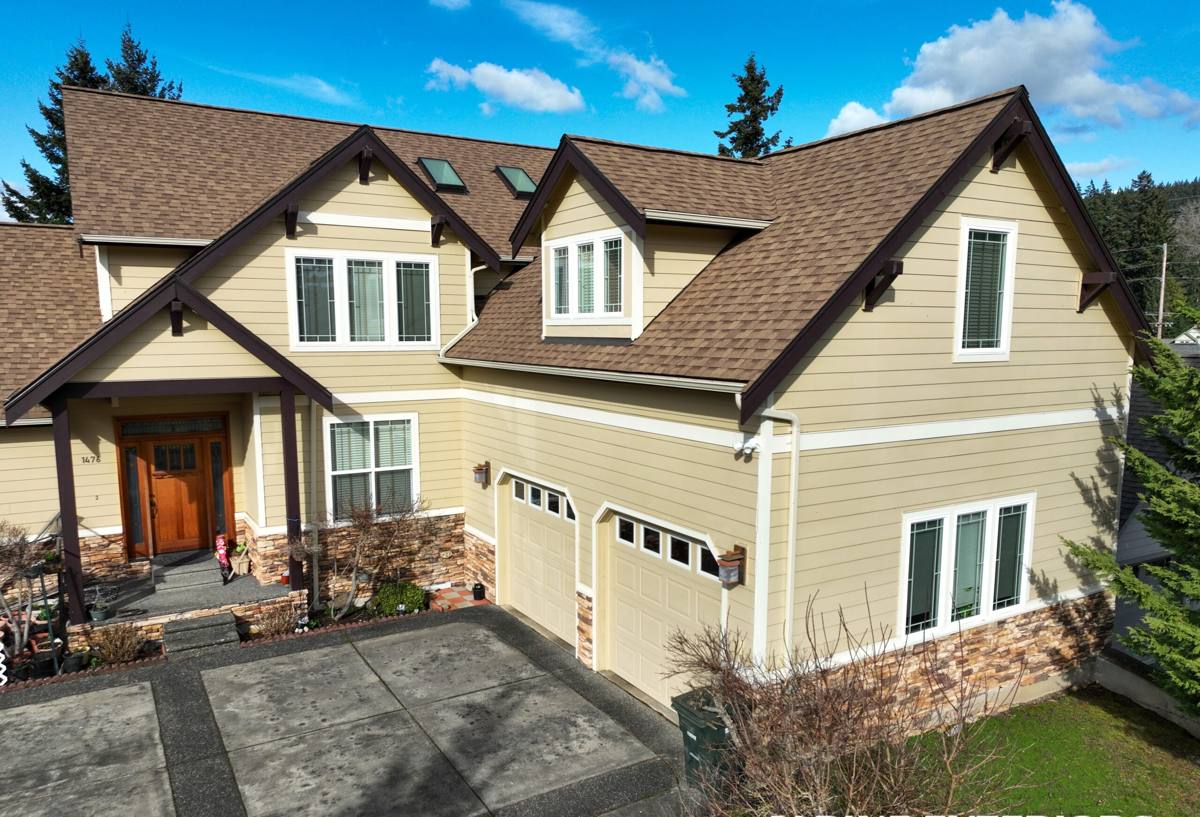
Signs Your Birch Bay Deck Needs Replacing, Not Just Repairing
Homeowners often call us wanting a few boards swapped out, and sometimes that's genuinely all that's needed. But there's a point where patching a deck costs more over time than replacing it correctly. Watch for these signs:
- Soft or spongy spots when you walk across the deck, especially near the house or around post bases
- Fasteners that are rusted, backing out, or leaving dark streaks on the boards
- Persistent moss or algae growth that comes back within weeks of cleaning
- Visible gaps opening up between boards, or boards that have cupped or crowned
- Ledger board area (where the deck meets the house) showing staining, soft wood, or gaps in the flashing
- Railings or stair stringers that flex or feel less solid than they used to
The ledger connection and the framing underneath matter more than the surface boards. A deck can look fine on top and still have compromised structure underneath — that's the part salt air and trapped moisture attack first, because it's usually the least ventilated and least visible part of the build.
Why "Just Refinishing" Sometimes Isn't Enough
Staining or sealing a deck extends its life, but it only protects what's on the surface. If moisture has already gotten into the framing, joist hangers, or ledger connection, a fresh coat of sealant on top doesn't fix that — it just hides it for a season or two. Part of our job during an estimate is telling homeowners honestly when a refinish will hold and when the underlying structure has already gone past that point.
What a Correct Deck Replacement Involves
A deck replacement isn't just tearing off old boards and screwing down new ones. In a coastal environment like Birch Bay, the sequence and the details matter as much as the materials.
Tear-Off and Structural Inspection
We remove the old decking and railings and inspect everything underneath — ledger board, joists, beams, posts, and footings. This is where we find the problems a surface-level look never would: soft framing, undersized joists for the span, corroded connectors, or a ledger that was never flashed correctly in the first place.
Ledger Flashing and Water Management
The connection between the deck and the house is the single most important detail for keeping water out of your home's structure. We install proper flashing that directs water away from the ledger and the siding above it, rather than relying on caulk alone, which fails over time — especially under the kind of driving, wind-blown rain this area gets off the water.
Framing and Hardware
In a salt-air environment, hardware choice matters. We use fasteners and structural connectors rated for coastal or treated-lumber exposure, not standard interior-grade hardware that will corrode within a few seasons. Joist spacing and beam sizing get set for your specific deck's span and expected load, not just whatever was there before.
Decking Material Installation
Whether you choose wood or composite decking, proper spacing between boards is critical for drainage and airflow — too tight and the deck holds moisture and grows moss faster; too wide and it feels unfinished underfoot. We also pay attention to airflow underneath the deck itself, since a deck built low to the ground with poor ventilation will trap moisture regardless of what's on top.
Railings, Stairs, and Code Compliance
Railings and stairs get rebuilt to current code height and spacing requirements, which is worth checking even on a like-for-like replacement — older decks are sometimes not up to current standards, and a replacement is the natural time to correct that.
Choosing Materials for a Birch Bay Deck
There's no single "best" decking material for every home — it depends on your budget, how much upkeep you're willing to do, and how close you are to the water. Here's how the common options actually compare in this kind of coastal, high-moisture environment.
| Material | Moisture & Moss Resistance | Maintenance | Typical Lifespan Here |
|---|---|---|---|
| Pressure-treated wood | Good if sealed regularly; moss-prone without upkeep | Annual cleaning and periodic sealing | 10–15 years with maintenance |
| Cedar | Naturally moisture-resistant but softens over time near salt air | Regular sealing to preserve color and resist checking | 12–18 years with maintenance |
| Composite decking | Strong moisture resistance; still needs cleaning to prevent surface moss | Occasional washing, no sealing needed | 20–25+ years |
| PVC decking | Highest moisture resistance of the common options | Low — periodic washing | 25+ years |
We don't push one product on every homeowner. If you like the look and feel of real wood and are willing to keep up with sealing, that's a legitimate choice. If you'd rather not think about your deck for years at a time, composite or PVC is the more practical call in a spot like Birch Bay where moss season is long and salt air shortens the life of anything left unsealed.
A Note on Substructure Materials
Whatever decking material you choose on top, the framing underneath should be treated lumber rated for ground contact or exposure, with corrosion-resistant hardware throughout. This is not the place to save money — it's the part of the deck you won't see again for 15-20 years, so it needs to be right the first time.
Our Process for a Birch Bay Deck Replacement
- On-site assessment — we look at the existing deck, the ledger connection, framing, and site conditions (sun exposure, wind direction, proximity to the water)
- Honest scope and estimate — we tell you what actually needs replacing versus what could be repaired, and walk through material options against your budget
- Permitting — deck replacements of significant size typically require a permit; we handle that process so it's not on you
- Tear-off and structural correction — old decking removed, framing and ledger inspected and corrected as needed
- Rebuild — new framing where required, proper flashing, decking, railings, and stairs installed to code
- Final walkthrough — we go over the finished deck with you, including any maintenance recommendations specific to the material you chose
Maintaining a New Deck in a Salt-Air, High-Moss Climate
A well-built deck in Birch Bay still needs some ongoing attention because of where it sits. A little seasonal maintenance goes a long way toward getting the full lifespan out of the materials you paid for.
- Sweep off standing debris and fallen leaves regularly, especially in fall and winter when moss growth accelerates
- Rinse salt residue off railings and hardware periodically if your deck faces the water directly
- Check fastener heads once a year for early signs of corrosion or backing out
- Keep gutters and downspouts near the deck clear so runoff isn't draining directly onto or under it
- Re-seal wood decking on the schedule recommended for your specific product — don't wait until it looks obviously worn
Why Hire a Crew That Already Works Birch Bay
A deck built to a generic inland spec doesn't hold up the same way here. Contractors who don't regularly work this close to the water sometimes underestimate how much flashing, hardware selection, and moss-conscious board spacing matter until a homeowner calls them back a few years later with a problem that could have been avoided. We work throughout Bellingham and Whatcom County, and Birch Bay's combination of salt exposure and heavy seasonal moisture is something we build for by default, not as an upgrade.
That also means we're familiar with the practical realities of the area — the kind of weather patterns to expect during a build, typical permitting turnaround for the county, and what tends to fail first on decks in this specific setting. That's the kind of knowledge that only comes from doing the work here repeatedly, not from a materials catalog.
Get a Straightforward Estimate
If your Birch Bay deck is showing soft spots, rusted hardware, or moss that won't quit coming back, it's worth having someone take a real look before you decide between a repair and a full replacement. We'll give you an honest assessment and a clear estimate, no pressure either way — just fill out the form below to get started.