 Bellingham Siding
 Windows Built for Barkley's Weather, Not Just Barkley's Style
Barkley homes cover a fair range of ages and styles, but they all sit under the same Whatcom County sky: long stretches of driving rain off the Sound, salty coastal air that creeps inland on windy days, and a moss season that seems to start earlier every year. Windows in this neighborhood don't fail because they're old — they fail because the seals, frames, and glazing were never matched to this specific climate in the first place. When we talk about "energy-efficient windows" for a Barkley home, we mean windows chosen and installed to hold up against wind-driven rain intrusion, resist the slow corrosion that salt air causes on hardware and finishes, and keep indoor humidity in check so moss and mildew don't get a foothold on sills and trim.
A window that's efficient on paper but poorly installed for this climate will still leak, fog, and waste energy. A window that's properly rated and correctly installed will do its job quietly for decades. That difference is almost entirely in the details — flashing, sealants, glazing package, and frame material — which is what the rest of this page walks through.
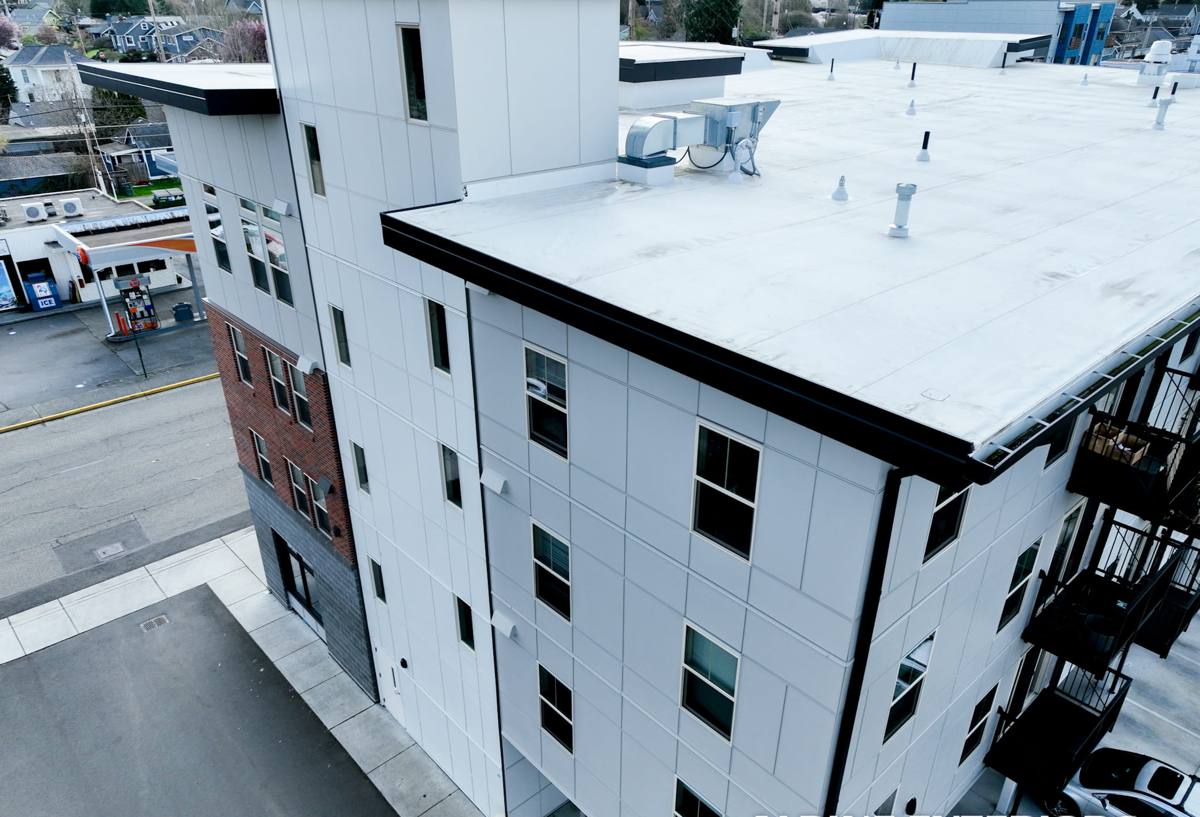
What Bellingham's Climate Actually Does to Windows
Driving Rain and Wind-Driven Moisture
Bellingham doesn't just get rain, it gets rain pushed sideways by wind coming off the water. That matters because a window can be perfectly watertight in a still, straight-down rainstorm and still leak under wind pressure if the flashing details around the rough opening aren't right. Most window water intrusion we see isn't a bad window — it's a window installed without proper flashing integration into the wall's water-resistive barrier.
Salt Air and Corrosion
Homes anywhere near the water pick up airborne salt that settles on exterior surfaces. Over years, that salt accelerates corrosion on unprotected metal hardware, degrades certain finishes faster than inland installations, and can shorten the working life of cheaper locks, hinges, and balance systems. It's not dramatic, but it's constant, and it's part of why we don't treat every window spec the same regardless of where the house sits.
Moss Season and Trapped Moisture
Whatcom County's moss season runs long — mild, wet, low-light conditions for months at a stretch are exactly what moss and algae need. Around windows specifically, the risk isn't moss on the glass, it's organic growth getting a start in poorly draining sill areas, in gaps where old caulk has failed, or on wood trim that stays damp because water isn't shedding away from the opening. Good drainage detailing at the sill is a bigger factor in long-term window performance here than in drier climates.
Why This Adds Up to a Different Standard
Take those three factors together and you get a simple conclusion: a window package correct for Barkley needs sound wind-driven-rain flashing, hardware and finishes that tolerate coastal air, and sill and trim detailing that actively sheds water rather than holding it. That's a specification decision, made before install day, not something fixed afterward with more caulk.
What "Energy-Efficient" Actually Means in Practice
The phrase gets used loosely. For a Whatcom County home, the parts that actually matter are:
- U-factor — how well the window resists heat loss. Lower is better for our cool, heating-dominated climate.
- Low-E coatings — a microscopically thin coating on the glass that reflects heat back inside during winter without noticeably darkening the room.
- Gas-filled double or triple glazing — the sealed space between panes, usually filled with argon, that slows heat transfer far more than a single pane of glass ever could.
- Air leakage rating — how much air sneaks around the sash even when it's closed and locked. This is the number most tied to drafts homeowners actually feel.
- Frame material and construction — vinyl, fiberglass, and wood-clad frames all perform differently on insulation value, expansion/contraction with temperature swings, and long-term moisture tolerance.
None of these numbers matter in isolation. A high-performance glazing package installed with a poor air seal around the frame will still feel drafty. That's why we treat the window unit and the installation as one system, not two separate jobs.
Choosing the Right Frame and Glazing for This Climate
| Frame Material | How It Handles Local Conditions | Maintenance Reality |
|---|---|---|
| Vinyl | Good moisture and salt-air tolerance, consistent seal over time | Low — no painting, occasional cleaning |
| Fiberglass | Very stable through temperature swings, strong long-term seal integrity | Low — durable finish, minimal upkeep |
| Wood-clad | Attractive interior look, but exterior cladding seams need monitoring in wet climates | Moderate — exterior seams and any exposed wood need periodic inspection |
| Aluminum | Prone to condensation and heat loss unless thermally broken; not our default recommendation here | Moderate to high, depending on thermal break quality |
We don't push one brand or material as the only answer. What we do is walk each Barkley homeowner through which option fits their specific exposure — a home facing prevailing wind and rain needs a different conversation than one tucked behind other structures — and we're upfront about the maintenance trade-offs of each choice rather than just selling the premium option.
How a Correct Installation Actually Works
The window unit itself is maybe half the performance story. The other half is installation, and this is where most of the long-term problems either get prevented or built in.
1. Assessment and Measurement
We start by inspecting the existing opening — checking for hidden water damage, rot, or prior flashing failures before anything is ordered. On older Barkley homes, this step regularly catches issues that would otherwise get sealed behind a new window and cause problems years later.
2. Removal Without Collateral Damage
Old windows come out carefully so we don't tear up siding, trim, or interior finishes more than necessary. This is also when any rot or moisture damage in the framing gets exposed and addressed — never covered up.
3. Flashing and Water Management
This is the step that matters most for wind-driven rain. Flashing tape and materials get integrated with the home's water-resistive barrier in the correct shingle-lap sequence, so water is directed out and down, never trapped behind the wall assembly.
4. Setting, Shimming, and Sealing
The window gets set level and plumb, shimmed correctly so it isn't stressed out of square, and sealed with sealants rated for this climate's temperature and moisture range — not a generic caulk that will crack and open a gap within a couple of winters.
5. Interior and Exterior Finish
Trim, casing, and sill work get finished to shed water away from the opening, which circles back to the moss-and-moisture point above — a sloppy sill detail is exactly the kind of spot where organic growth gets started.
6. Final Check
Every unit gets operated, checked for square operation and a tight seal, and inspected around the perimeter before we consider the job done.
Signs a Barkley Home's Windows Need Attention
- Visible condensation or fogging between panes — a sign the seal has failed and the insulating gas is gone
- Drafts felt near the frame even when the window is closed and locked
- Difficulty opening, closing, or locking, especially after the frame has swelled or shifted
- Soft or discolored wood trim around the window, especially at the bottom sill
- Visible moss, algae, or persistent dark staining on sills or exterior trim
- A noticeably higher heating bill without another clear explanation
- Peeling paint or bubbling finish on interior sills, often a sign of trapped moisture
What Homeowners Should Ask Before Hiring Anyone
Window replacement is one of those projects where the sales pitch and the actual installation quality can be very different things. A few questions worth asking any contractor, including us:
- How will you flash and seal this opening specifically, not just generically?
- What happens if you find rot or water damage once the old window is out?
- What glazing and frame options do you actually recommend for a home in this location, and why?
- What's covered under warranty — the glass unit, the installation labor, or both?
- Can you walk me through your process before work starts, not just after I sign?
A contractor who's comfortable answering all of these in plain language, without dodging the installation questions, is usually the safer bet.
Why Local Experience in Barkley Specifically Matters
A crew that regularly works in Barkley and the surrounding Bellingham area already knows how prevailing wind and rain patterns hit homes in this part of Whatcom County, what kind of siding and trim conditions are common on homes of a given age here, and how moss and moisture problems tend to show up locally before they become bigger issues. That's not a marketing point — it's the difference between a generic install and one that accounts for how this specific neighborhood's weather behaves. It also means faster response if something needs a warranty check or adjustment down the road, since we're not driving in from out of the area.
Getting Started
If your Barkley home has windows that are drafty, fogged, hard to operate, or just older than their expected service life, we're happy to take a look and give you an honest assessment — no pressure, no upsell script. Reach out for a free estimate, and we'll walk your home's specific exposure and needs with you before recommending anything.