 Bellingham Siding
 Windows in the Puget Area Take a Different Kind of Beating
If you own a home in the Puget neighborhood on Bellingham's waterside, you already know your windows don't age the same way a house ten miles inland does. The combination of salt-laden air off the water, wind-driven rain that hits window walls almost sideways during winter storms, and the long gray stretch of moss season each year works on window assemblies in ways that are easy to underestimate until the frames start to go soft or the glass fogs up between panes.
We've replaced windows across a lot of Bellingham neighborhoods, and homes near the Puget shoreline consistently show a pattern: failure shows up first at the frame corners, the bottom sash rail, and anywhere caulking has been asked to do a job that flashing should be doing instead. Understanding that pattern is the difference between a window replacement that lasts twenty-plus years and one that starts failing again in five.
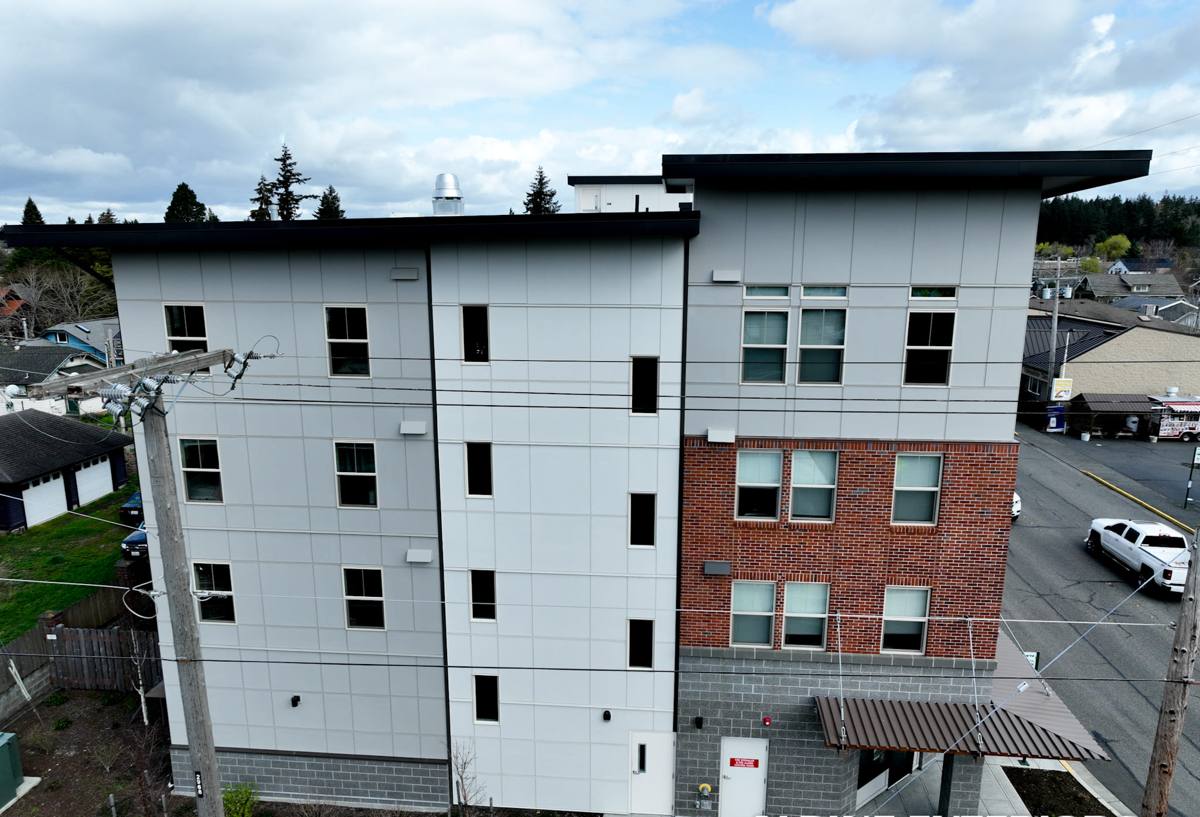
What Salt Air, Driving Rain, and Moss Season Actually Do to a Window
Salt Air and Metal Hardware
Airborne salt is corrosive to unprotected or lower-grade metal — hinges, balance systems, screws, and cheaper aluminum cladding all corrode faster this close to the water. Once hardware starts to pit or seize, sashes get hard to operate, and a window that's hard to close is a window that gets left cracked open during a storm.
Driving Rain and Water Intrusion
Whatcom County's weather doesn't just rain straight down — winter systems push rain horizontally against west- and south-facing walls for days at a stretch. That means the flashing, sill pan, and sealant details around a window matter more here than they would in a drier climate. A window that's watertight in a light shower can still leak under sustained wind-driven rain if it wasn't flashed correctly the first time.
Moss and Sustained Moisture
Bellingham's long wet season keeps north-facing siding and window trim damp for months at a time. Moss and algae hold moisture against wood trim and sills, which accelerates rot in anything that isn't properly primed, sealed, or clad. We see this most on older wood-frame windows where the exterior trim was painted over rather than properly maintained.
Signs a Puget-Area Home Needs Window Replacement, Not Just Repair
- Fogging or a visible haze between the panes — the seal has failed and the gas fill (or air gap) is gone, so repair won't restore the insulating value
- Soft, spongy, or discolored wood at the sill or bottom corners of the frame
- Windows that are difficult to open, close, or lock — often a sign hardware has corroded or the frame has racked out of square
- Visible daylight or a noticeable draft around the frame when it's windy
- Condensation forming on the interior glass or frame regularly during colder months
- Paint that keeps failing on the exterior trim no matter how often it's redone
- Noticeably higher heating bills in a home whose windows haven't been touched in 20+ years
Any one of these on its own might be a repair. Several of them together, especially on a home's water-facing side, usually mean the window assembly itself — frame, flashing, and glass — has reached the end of its useful life.
What a Correct Window Replacement Job Actually Involves
Window replacement done right is mostly about what happens before the new window ever goes in the opening. In a climate like this one, cutting corners on prep work is exactly how a brand-new window ends up leaking within a year or two.
- Remove the old window and inspect the rough opening. This is where hidden water damage from years of driving rain or moss-trapped moisture shows up. Any soft framing or sill material gets addressed before anything new goes in — installing a new window over a compromised opening just hides the problem.
- Rebuild or repair the sill pan and flashing. The sill pan needs to slope outward and integrate correctly with the house wrap or weather-resistive barrier, so any water that gets past the window sheds outward instead of into the wall cavity.
- Set the new window level, plumb, and square. Even a high-end window will perform poorly if it's installed out of square — sashes won't seal evenly and hardware wears prematurely.
- Integrate flashing tape and house wrap in the correct shingle-lap order. Water needs a continuous path down and out, never a path where it can get trapped behind the cladding.
- Insulate the gap between frame and rough opening properly. Too little insulation leaves a draft path; overfilling with the wrong material can bow the frame and cause operational problems.
- Seal and caulk exterior joints last, as a backup layer, not the primary defense. Caulk should be the second line of protection behind good flashing, not the only thing keeping water out.
Choosing the Right Window Material and Glass Package for This Microclimate
There's no single "best" window brand or material for every home — the right choice depends on sun exposure, whether the home faces the water, and how much upkeep an owner wants to take on. Here's how the common options actually compare for a Puget-area home:
| Material | How it handles salt air & rain | Maintenance | Typical trade-offs |
|---|---|---|---|
| Vinyl | Won't corrode or rot; handles moisture well | Low — occasional cleaning | Fewer color/finish options; can't be repainted |
| Fiberglass | Very stable in temperature and moisture swings; strong seal retention | Low | Higher upfront cost than vinyl |
| Aluminum-clad wood | Exterior clad resists weather; interior wood offers warmth and finish options | Moderate — interior wood still needs periodic attention | Cladding seams and hardware need quality metal to resist salt corrosion long-term |
| Solid wood (uncladded) | Vulnerable to sustained moisture and moss-trapped damp without diligent upkeep | High — regular painting/sealing required | We generally steer water-facing homes away from this option unless upkeep is a firm commitment, given the maintenance burden in this climate |
For glass, we typically recommend a dual-pane, low-E package as the baseline for this area, with argon fill for improved insulating performance. Homes with more direct wind or afternoon sun exposure sometimes benefit from a higher-performance low-E coating tuned for solar control rather than the standard coating — we'll walk through which makes sense once we've seen the specific exposure of your home.
A Note on Product Selection
We don't install every window product on the market, and that's intentional. Some lower-cost assemblies use hardware or seal designs that hold up fine in drier, milder climates but don't have a strong track record against sustained salt air and wind-driven rain. Our standard is to spec products and installation details that match what this specific stretch of coastline actually demands, not just what's cheapest to install.
Cost Factors for Window Replacement in the Puget Area
Every home is different, so we don't quote sight-unseen — but these are the main variables that move a window replacement estimate up or down:
| Factor | Why it affects cost |
|---|---|
| Number and size of openings | More or larger windows mean more material and labor |
| Extent of hidden water damage | Rotted framing or sill material found during removal adds repair scope |
| Material and glass package chosen | Vinyl, fiberglass, and clad-wood options are priced differently, as are glass upgrades |
| Full-frame replacement vs. insert replacement | Full-frame (removing to the rough opening) costs more than an insert but is often the right call when flashing or framing needs attention |
| Exterior trim and siding tie-in | Matching or repairing surrounding trim and siding adds scope, especially on older homes |
| Access and site conditions | Second-story or hard-to-access windows take more time and equipment |
We'll never quote a number beyond a broad ballpark without seeing the actual openings and condition of the framing — anyone who quotes a firm price over the phone for a coastal home hasn't accounted for what's usually hiding behind the old trim.
Our Process, Start to Finish
- Free on-site assessment. We look at every window being considered, check for hidden moisture damage, and talk through what's actually needed versus what can wait.
- Straightforward written estimate. Material options, glass packages, and scope are laid out clearly, with no pressure to upgrade beyond what your home needs.
- Scheduling around the weather. Given how much rain this area gets, we plan install days to keep openings weathertight and protected at every stage — we don't leave a home exposed overnight.
- Removal, inspection, and any needed framing repair. Any rot or damage found gets addressed and documented before the new window goes in.
- Installation to manufacturer and code specifications. Flashing, insulation, and sealing done in the correct order, every time.
- Final walkthrough. We test operation, check seals, and clean up the job site before calling it done.
Permits and Local Code Considerations
Window replacement in Bellingham and unincorporated Whatcom County can require a permit depending on scope — particularly if the rough opening size is changing, if it's a full-frame replacement affecting structural framing, or if the work is part of a larger remodel. Egress requirements for bedroom windows are also worth checking if a window is being resized. We handle the permit question as part of the estimate so there are no surprises mid-project.
Why It Matters to Hire a Crew That Already Works in Puget
A lot of window problems we get called out to fix started as a perfectly good window installed by a crew that does most of its work further inland, without accounting for what salt air and driving rain do differently here. The flashing details, the hardware corrosion resistance, and the sealant choices that hold up fine in a drier part of the county don't always hold up a few blocks from the water.
Working this neighborhood regularly means we're not guessing at how a given product or install detail performs here — we've seen it hold up, or we've seen it fail, and we adjust accordingly. That's the value of hiring local experience over a general contractor passing through.
Get a Free, No-Pressure Estimate
If your Puget-area home has windows that are drafty, hard to operate, fogged, or showing wear around the frames, we're happy to take a look and give you an honest assessment of what's actually needed. There's no obligation and no pressure — just a straight answer about your options. Use the form below to request your free estimate.