 Bellingham Siding
 A storm rolls through, and a day or two later you notice a missing shingle, a damp patch on the ceiling, or granules piling up in the gutter. For homeowners in Birchwood, that's not a rare event — it's a predictable part of owning a roof in this part of Bellingham. This page covers what storm damage repair actually involves here, what separates a real repair from a quick patch, and what to expect if you call us after the next one.
Why Storm Damage Hits Birchwood Roofs Differently
Birchwood is a residential pocket of Bellingham, close enough to Bellingham Bay that homes here take on a mix of marine weather most inland neighborhoods don't see. Salt-laden air off the water works on exposed metal — nail heads, flashing, gutter fasteners — faster than it does twenty miles inland. Layer that on top of the driving, wind-blown rain that rolls through Whatcom County every fall and winter, and a roof that's fine in July can develop real problems by the time the January storms pass through. Add in the region's long moss season — mild, wet winters and shaded lots give moss months to establish itself — and you have three separate stressors working on the same roof at the same time.
None of this means a Birchwood roof is doomed to leak. It means storm damage repair here has to account for conditions that a generic roofing guide written for a drier climate simply doesn't cover.
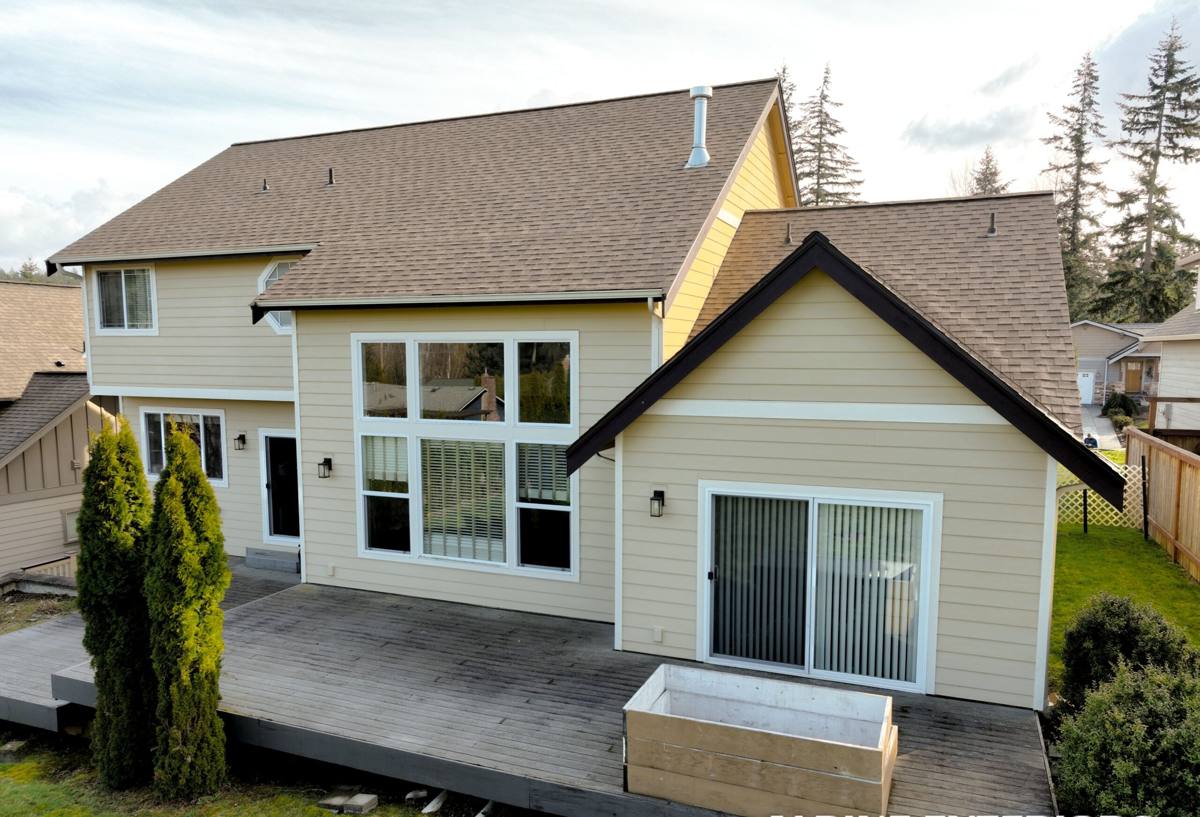
What Storm Damage Actually Looks Like on the Ground
Storm damage is rarely as obvious as a hole in the roof. More often it shows up as small, easy-to-miss signs that get worse with the next storm if nobody catches them.
- Shingles that are cracked, curling, or missing entirely after high winds
- Bald patches where wind or hail has stripped granules down to the bare mat
- Flashing around chimneys, vents, or skylights that's bent, lifted, or pulled loose
- Soft or spongy spots on the roof surface, which usually mean the decking underneath is wet
- Water stains on ceilings or in the attic, even faint ones, appearing a few days after a storm
- Gutters and downspouts packed with granules, moss clumps, or broken shingle pieces
- Moss buildup at the edges of shingles or in valleys, holding moisture against the roof surface
Any one of these on its own might be minor. Several together, especially after a named storm or a stretch of high wind, is worth a real inspection rather than a wait-and-see approach.
What a Correct Storm Damage Repair Actually Involves
A rushed storm repair patches over the visible problem. A correct one addresses what the storm exposed. That distinction matters more in Birchwood's climate than in drier parts of the country, because trapped moisture under a quick patch has months of damp weather to do damage before anyone notices.
Tear Back Before You Cover Up
Before any new material goes down, the damaged section gets pulled back far enough to see the decking underneath. If the plywood or sheathing is soft, delaminated, or stained, that gets addressed first — nailing new shingles over compromised decking just hides the problem for another season.
Matching Materials, Not Just Nearby Materials
Shingles fade and weather over time, so a patch using brand-new material next to five-year-old shingles will stand out and, more importantly, may not shed water the same way. We match style, weight, and where possible color as closely as the existing roof allows, and we're upfront when an exact match isn't realistic.
Flashing and Underlayment Get the Same Attention as Shingles
Storm damage repair that only replaces shingles and ignores flashing is a callback waiting to happen. Step flashing at walls and chimneys, valley metal, and vent boots all get checked and re-sealed or replaced as needed. In vulnerable areas — valleys, eaves, around penetrations — we use self-adhering ice-and-water membrane underneath, which matters more here than in drier climates because it's the backup layer when wind-driven rain gets pushed sideways under the shingle line.
Wind-Rated Fastening
How a shingle is fastened matters as much as what shingle goes down. Under-driven, over-driven, or misplaced nails are a common reason a roof that "should" hold up in wind doesn't. Repairs get nailed to the pattern and fastener count the material calls for, not whatever's fastest, since a roof that took wind damage once is a roof that will see the same wind again.
Repair or Replace? The Factors We Actually Weigh
Not every storm-damaged roof needs a full section replaced, and not every roof is worth patching. The honest answer depends on a few concrete factors, which we walk through with the homeowner rather than defaulting to whichever job is bigger.
| Factor | Leans Toward Repair | Leans Toward Replacement |
|---|---|---|
| Roof age | Under 12–15 years | Near or past expected lifespan |
| Extent of damage | Isolated to one slope or section | Spread across multiple slopes |
| Decking condition | Dry, sound sheathing | Soft, rotted, or repeatedly wet decking |
| Repair history | First or second repair | Third or more patch on the same roof |
| Material availability | Close match still available | Discontinued or badly faded shingle line |
We'll tell you flat out when a repair is the sound, cost-effective call — and equally flat out when patching an aging roof is just delaying a bigger bill.
How Our Storm Damage Repair Process Works
- Inspection and documentation. We get on the roof — not just a drone flyover — and document the damage with photos and notes, including anything an insurance adjuster would want to see.
- A clear, written repair plan. You get a plain-English explanation of what's damaged, what needs to happen, and an honest estimate — no vague allowances or padded scopes.
- Material staging. We source shingles, flashing, and underlayment matched to your existing roof before work starts, so the job isn't held up mid-repair.
- Weather-safe interim protection. If more rain is on the way before we can complete the repair, we'll get the area properly protected rather than leaving it exposed.
- Repair and cleanup. Work is completed, the area is cleaned of debris and old material, and we walk the roof with you before calling it done.
Insurance and Storm Damage: What Birchwood Homeowners Should Know
Most homeowner's policies cover sudden storm damage — wind, falling limbs, hail — though coverage details and deductibles vary by policy, so we're not going to tell you what yours covers. What we can do is document the damage thoroughly and honestly, in a form that gives you something solid to bring to an adjuster, including clear photos and a plain description of what happened and when.
One thing worth watching for after any regional storm: crews from out of the area sometimes go door to door offering fast, full-roof-replacement quotes before an adjuster has even looked at the property. A legitimate storm repair should start with an honest inspection of what's actually damaged, not a pre-written scope built to maximize a claim.
Moss, Moisture, and the Long Bellingham Wet Season
Storm damage and moss damage often show up on the same roof, because a roof already carrying moss holds water longer after a storm passes. Moss roots work under shingle tabs, lift edges, and keep the roof surface damp well after the rain stops — which is exactly the kind of slow, steady moisture that accelerates rot in decking already stressed by wind or impact damage.
Where a roof's moss buildup is heavy, we'll flag it separately from storm repair, because treating the underlying moisture problem is what keeps the next storm from causing the same damage again. That can mean gutter and valley clearing, targeted moss treatment, or in some cases zinc or copper strips near the ridge — each with its own maintenance trade-offs we're happy to walk through honestly rather than oversell.
After the Repair: What Keeps It From Happening Again
A good repair holds up better with a little routine attention, especially in a climate that stays wet for months at a stretch. None of this is complicated, but it's the kind of maintenance that gets skipped until a storm finds the weak spot.
- Clear gutters and downspouts at least twice a year, more often under overhanging trees
- Keep an eye on valleys and low-slope sections where moss and debris collect first
- Walk the attic after a hard storm and check for new stains, even faint ones
- Have flashing and fastener condition checked every few years, not just when there's visible damage
Why a Crew That Already Works Birchwood Makes a Difference
Storm response is partly about speed and partly about knowing the neighborhood. A crew that's already worked roofs in Birchwood and the surrounding Bellingham area has a feel for how the local roof stock ages, which roof lines tend to take wind damage on which sides, and how Whatcom County's permitting and inspection process works for anything beyond a straightforward repair. That local familiarity means less time spent re-learning the basics on your property and more time actually fixing the problem.
It also matters after a wider storm event, when a lot of roofs in the same area need attention at once. A crew that's local and established isn't juggling travel time between counties or leaving town once the initial rush of calls dies down — they're still around for the follow-up, and for the next storm after that.
If a recent storm has left you with missing shingles, a soft spot on the roof, or just a nagging feeling something's not right, we're glad to take a look. The estimate is free, there's no pressure to sign anything on the spot, and you'll get a straight answer about what's actually going on with your roof.