 Bellingham Siding
 Siding in Sehome: What Local Homes Are Up Against
Sehome sits close enough to Bellingham Bay to catch salt-laden air rolling in off the water, and its position on the hillside near Sehome Hill and the arboretum means a single house can have very different exposure from one wall to the next — open and wind-driven on one side, shaded and slow to dry on another. That mix is exactly the kind of condition that wears out exterior siding faster than homeowners expect.
Whatcom County's marine climate keeps humidity high for most of the year, and Bellingham's rainy season isn't just about total rainfall — it's about how often walls get wet and how long they stay that way. Add in a moss season that can stretch from fall into spring, and you have an environment where any weakness in the siding system, the water barrier behind it, or the trim details around it eventually shows up as rot, staining, or paint failure.
Salt Air and Coastal Moisture
Airborne salt accelerates corrosion on fasteners, flashing, and trim hardware, and it draws moisture into porous materials even without direct rain contact. Siding on the bay-facing and west-facing sides of a Sehome home typically takes the brunt of this, which is why fastener choice and flashing detail matter as much as the siding panel itself.
Shade, Moss, and Slow-Drying Walls
Mature tree cover common in this part of Bellingham keeps some walls shaded for most of the day. Shaded siding dries slower after rain, holds more moisture at the surface, and is where you'll usually see moss and algae growth first. Over time, that constant damp exposure is harder on wood-based products than it is on materials engineered to resist moisture absorption.
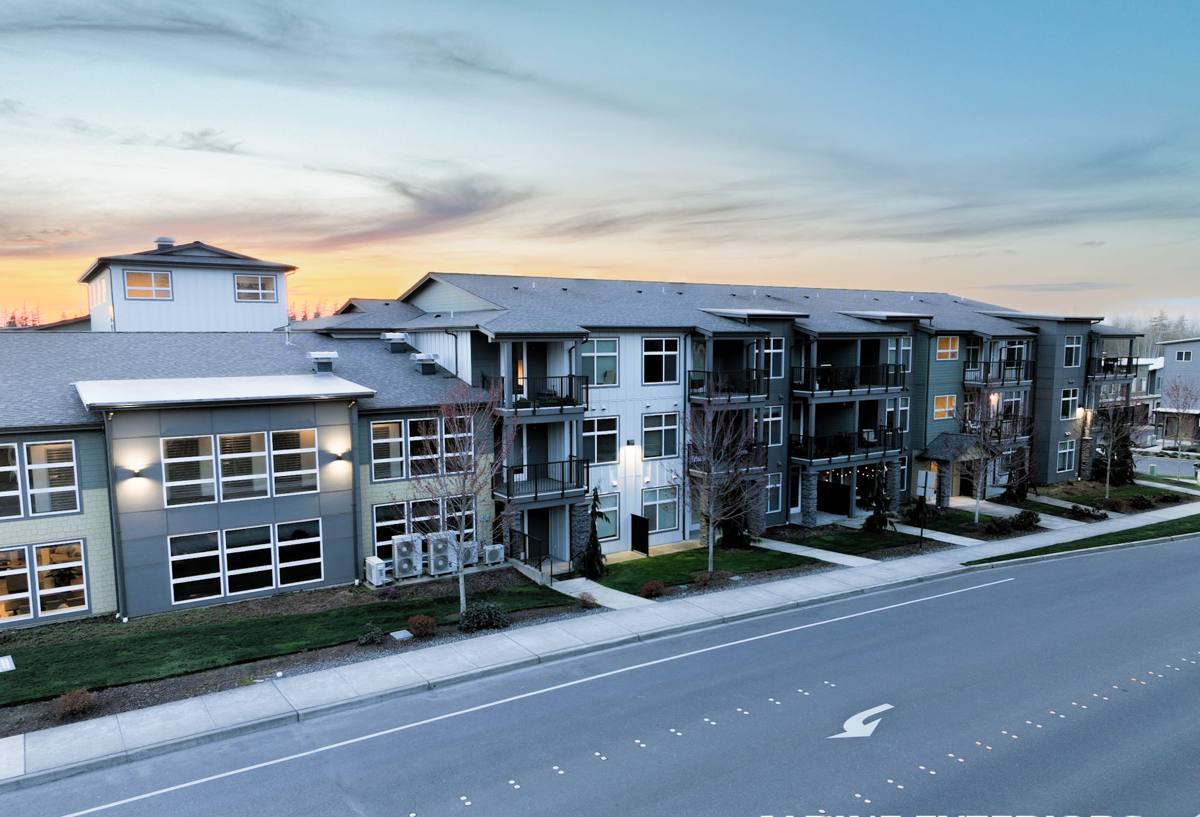
Why Older Siding Fails Faster in This Neighborhood
Sehome has a mix of older homes closer to the university area and newer infill construction, and we see the same failure patterns repeat across both. Original wood siding on older homes tends to show cupping, checking, and rot at butt joints and bottom edges once paint and caulk start failing. Vinyl siding, common on remodels from past decades, handles moisture fine on its own but does little to stop water once it gets behind the panels — and Bellingham's wind-driven rain finds those gaps. Engineered wood products that weren't rated for this climate, or weren't installed with the moisture protection they require, can swell and delaminate at cut edges and seams.
The common thread isn't the brand of siding — it's what's happening behind it. A weather-resistive barrier that's torn, taped wrong, or missing at penetrations will let water into the wall assembly no matter how good the visible siding looks. That's usually where the real damage starts, long before it's visible from the curb.
What a Correct Siding Installation Actually Involves
Good siding installation is mostly about what you don't see once the job is done. The panel is the last layer, not the first line of defense.
Water Management Comes First
Every wall gets a continuous weather-resistive barrier, properly lapped and taped, with flashing integrated at every window, door, and penetration so water is directed out and down rather than trapped behind the siding. On a climate like this one, a drainage gap between the siding and the wall assembly matters — it gives incidental moisture a path to escape instead of sitting against the sheathing.
Fastening and Fit
Fiber cement siding has to be fastened according to the manufacturer's nailing pattern and exposure requirements, with the correct fastener length and type for the substrate. Panels need proper expansion clearance at joints and shouldn't be caulked so tight they can't move seasonally. Rushed fastening — overdriven nails, wrong spacing, missing blocking at butt joints — is one of the most common causes of early siding problems we see on reinstalled or poorly maintained homes.
Trim, Transitions, and Penetrations
Window and door trim, roof-to-wall transitions, deck ledger connections, and every hose bib or vent penetration is a place water can get in if it's not detailed correctly. This is where installation quality shows up first — usually years before the field siding itself would ever fail on its own.
Why We Install Only James Hardie Fiber Cement
We standardized on James Hardie fiber cement because it holds up to the specific stresses this climate creates, and because it gives homeowners a warranty and a factory finish system we can stand behind. We don't install LP SmartSide, vinyl, Cemplank, Allura, or primed wood siding — not because those products have no legitimate use, but because we'd rather install one system correctly and know exactly how it performs over time than split our expertise across several.
| Consideration | What Matters for Sehome Homes |
|---|---|
| Moisture behavior | Fiber cement doesn't swell, rot, or delaminate the way wood-based products can when exposed to sustained damp conditions |
| Fire resistance | Non-combustible material, a meaningful factor for insurance and wildfire-adjacent building codes in Washington |
| Finish durability | Factory-applied ColorPlus finish resists fading and chalking better than field-applied paint, which matters under coastal sun and salt exposure |
| Climate engineering | Hardie's HZ product lines are formulated by climate zone, including the wetter Pacific Northwest zone this region falls under |
| Warranty | A transferable, manufacturer-backed warranty on both the substrate and the factory finish, which adds resale value homeowners can point to |
None of this means other products are junk — it means we made a professional call to specialize, and Hardie is the system we're confident will still be doing its job on a Sehome home fifteen and twenty years from now.
Our Process for a Sehome Siding Installation
Assessment and Measurement
We start by walking the exterior wall by wall, checking existing siding, trim, flashing, and — where old siding is coming off — the condition of the sheathing underneath. Shaded and salt-exposed walls get a closer look, since that's usually where hidden moisture damage shows up first.
Tear-Off and Substrate Check
Once old siding is removed, we inspect the sheathing and framing before anything new goes up. Any soft or water-damaged sheathing gets repaired or replaced — installing new siding over a compromised substrate just hides the problem for a few more years instead of solving it.
Weather Barrier and Flashing
New weather-resistive barrier goes on with proper laps and taped seams, and flashing is integrated at every window, door, and penetration before a single piece of siding is hung.
Hardie Installation
Panels, planks, or shingles go up to Hardie's fastening and clearance specifications, with attention to butt joint blocking, corner details, and consistent reveal lines.
Final Walkthrough
We walk the finished job with the homeowner, checking trim, caulking, and paint lines, and go over basic care so the siding performs the way it's supposed to for the long haul.
Cost Factors for Siding Replacement in Sehome
Every home is different, but these are the factors that most often move the price up or down on a Sehome project:
| Factor | Why It Affects Cost |
|---|---|
| Extent of substrate repair | Rot or damage found behind old siding has to be fixed before new siding goes on |
| Home size and wall complexity | More corners, gables, and dormers mean more cutting, flashing, and labor time |
| Siding profile chosen | Lap siding, shingle-style panels, and board-and-batten each price differently in materials and install time |
| Access and site conditions | Hillside lots, tight setbacks, or limited staging space can add time and equipment needs |
| Trim and detail work | Window and door surrounds, fascia, and corner treatments add to both material and labor cost |
We give a firm, itemized estimate after seeing the actual walls in person — not a phone-quote guess — so there are no surprises once work starts.
Signs Your Sehome Home May Need New Siding Now
- Persistent moss, algae, or dark streaking that comes back soon after cleaning
- Paint that's peeling, bubbling, or failing faster than a normal repaint cycle
- Soft spots, cracking, or visible warping in the siding surface
- Gaps opening up at seams, corners, or trim boards
- Rising heating bills that point to failing insulation or air sealing behind the walls
- Visible rot or staining at the bottom edge of walls or around window trim
Why Hiring a Crew That Already Works in Sehome Matters
Sehome's mix of hillside lots, mature tree cover, and older housing stock close to newer construction means every job has its own combination of access challenges and moisture exposure to plan around. A crew that already works this part of Bellingham knows how to stage a job on a tight or sloped lot, where to expect hidden sheathing damage on homes of a certain era, and how local permitting through the City of Bellingham works for exterior replacement projects. That familiarity shows up as fewer surprises, fewer change orders, and a job that accounts for this specific climate instead of a generic install plan.
If you're weighing siding options for a home in Sehome, we're happy to take a look and walk you through what we'd actually recommend for your walls — no pressure, no obligation. Request a free estimate below and we'll get back to you to schedule a time to come out.