 Bellingham Siding
 Building Decks in Sehome the Right Way
Sehome sits close enough to Bellingham Bay and the hills around it that homes here deal with a specific mix of weather: salt-tinged air rolling off the water, long stretches of driving rain from fall through spring, and shade patterns from mature trees that keep certain sections of a yard damp for months at a time. A deck that isn't built with that combination in mind will show it within a few seasons — soft spots, green streaks, loose fasteners, and boards that cup or crack. A deck that is built for it will still look and perform well a decade or two later.
We work on decks throughout Bellingham and Whatcom County, and Sehome's older housing stock, mixed lot grades, and tree cover mean we see certain problems here more often than in newer, more open subdivisions. This page walks through what actually matters for a Sehome deck project — not generic decking advice, but the specific decisions that hold up in this neighborhood's conditions.
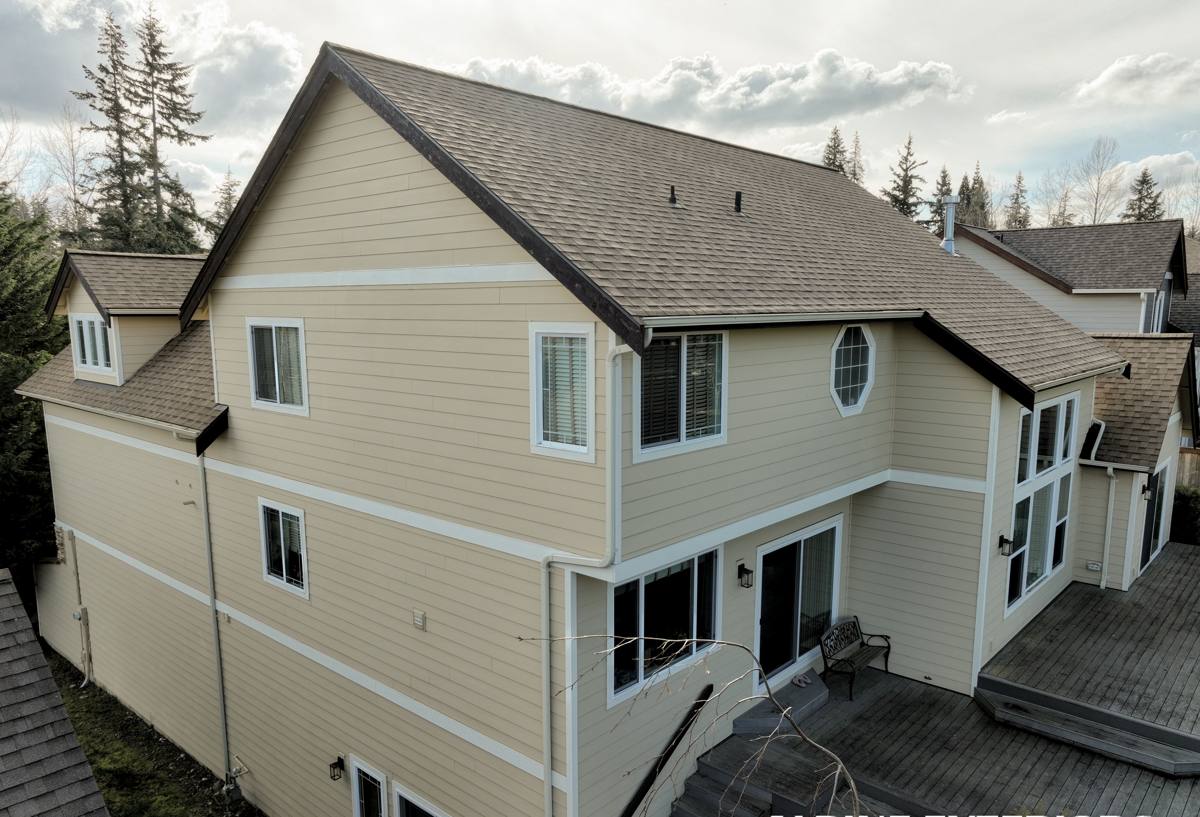
What Bellingham's Climate Actually Does to a Deck
Moisture is the real enemy, not cold
Whatcom County doesn't get the deep freeze-thaw cycles that crack decks in colder climates, but it makes up for that with sheer duration of wetness. A deck here can stay damp for days after a storm, especially in shaded yards or under overhangs. That constant moisture is what drives rot in end grain, corrosion in fasteners, and the slow breakdown of any coating that isn't holding up its end of the bargain.
Moss season is longer than most homeowners expect
In much of Bellingham, moss and algae can establish on a deck surface almost any month of the year, but it accelerates hard from late fall through early spring when temperatures stay mild and surfaces rarely fully dry out. Moss holds moisture against the board surface, and on wood decking it can mask early rot until a board actually gives underfoot. On any decking material, moss buildup on stairs and ramps is a real slip hazard.
Salt air adds a slower, quieter problem
Proximity to the bay means airborne salt is part of the picture for many Sehome properties, even a mile or two inland on breezy days. Salt exposure speeds up corrosion on exposed metal — screw heads, joist hangers, railing hardware, and fasteners — well before most homeowners notice anything wrong with the decking boards themselves. This is one of the most overlooked failure points on older decks in this area.
What a Correctly Built Deck Involves Here
A deck that's going to hold up in Sehome's conditions is decided mostly in the parts you won't see once it's finished. We pay close attention to a handful of details that matter more here than in a drier climate:
- Ledger board flashing: The connection where a deck attaches to the house is the single most common source of hidden rot. Proper flashing keeps water from working its way behind the ledger and into the house's structure, not just off the deck surface.
- Footing depth and drainage: Footings need to reach stable, load-bearing soil and shed water away from the post base rather than sitting in a puddle after every storm.
- Fastener and hardware grade: Given salt exposure, we use corrosion-resistant fasteners and structural hardware rated for the conditions rather than standard-grade hardware that looks fine on day one and fails quietly over several years.
- Board spacing and airflow: Correct gapping between boards and adequate clearance underneath the deck lets air move through, which is what actually keeps moss and mildew from taking hold — more than any surface treatment alone.
- Grading under and around the deck: If the ground beneath a deck doesn't drain, everything above it stays damp longer than it should, no matter what decking material sits on top.
Choosing Decking Material for a Sehome Yard
There isn't one right answer for every yard — a sunny, open deck and a shaded, tree-covered one in the same neighborhood can call for different materials. Here's how the common options actually compare under Bellingham's conditions:
| Material | How it handles moisture & moss | Maintenance | Typical lifespan here |
|---|---|---|---|
| Pressure-treated wood | Absorbs moisture; needs sealing to resist rot and moss growth | Annual cleaning and periodic re-staining/sealing | 10–15 years with upkeep |
| Cedar | Naturally more rot-resistant than treated pine, but still absorbs water and can support moss in shaded areas | Regular cleaning; sealing recommended every 1–2 years | 15–20 years with upkeep |
| Capped composite | Moisture-resistant cap layer sheds water and resists moss adhesion much better than wood | Occasional washing; no staining or sealing | 25+ years |
| PVC decking | Fully synthetic; does not absorb moisture, very resistant to moss and mildew staining | Occasional washing only | 25–30+ years |
We install both wood and composite/PVC systems and will give you a straight answer about which fits your yard, your budget, and how much upkeep you actually want to sign up for — not a push toward whatever has the best margin.
Why we're selective about certain low-cost composite boards
Not all composite decking is built the same. Some budget composite boards use a thinner cap layer or an exposed wood-plastic core edge that can absorb water at cut ends and fastener holes, which matters a lot in a climate this wet. Our standard is to use products with full-perimeter capping and a manufacturer warranty structure that actually covers moisture and staining issues, not just structural failure. That's a maintenance and longevity decision on our part, not a knock on any single brand.
Permits, Railings, and Code in Whatcom County
Most new decks and significant rebuilds in Bellingham require a permit, and inspections check structural framing, footing depth, and guardrail and stair details before it's signed off. Any deck more than a modest height above grade needs code-compliant guardrails, and stair and handrail dimensions are specific — not a matter of preference. We handle the permit process as part of the job, which matters in Sehome's mix of older lots and additions where existing structures aren't always up to current code and need to be accounted for in the plan.
Our Process on a Sehome Deck Project
- On-site assessment: We look at the site grading, sun and shade exposure, existing structure if there is one, and how water currently moves through the yard.
- Design and material selection: We talk through layout, size, and material trade-offs based on how you'll actually use the space and how much maintenance you want long-term.
- Permit and plan review: We prepare and submit what's needed for permitting and make sure the design meets current code before any work starts.
- Build: Footings, framing, ledger flashing, decking, and railings — built in that order with inspections at the required stages.
- Final walkthrough: We go over the finished deck with you, including what maintenance (if any) it needs and what to watch for over the seasons ahead.
Keeping a Deck Ahead of Moss and Moisture
Whatever material you choose, a little seasonal attention goes a long way in this climate:
- Sweep leaves and debris off the deck surface regularly in fall — trapped organic matter is what feeds moss growth.
- Wash the surface at least once a year, more often on shaded sections, using a deck-safe cleaner rather than a high-pressure setting that can damage board surfaces.
- Keep gutters and downspouts clear so runoff isn't dumping directly onto or under the deck.
- Check railing posts and stair hardware periodically for corrosion or loosening, especially on decks with bay exposure.
- Re-seal wood decking on schedule — skipping a year in this climate lets moisture get ahead of you fast.
- Trim back overhanging branches where practical to let more light and air reach the deck surface.
Signs an Existing Sehome Deck Needs Attention
If your deck is showing any of the following, it's worth having someone look at it before it becomes a safety issue rather than just a cosmetic one:
- Soft, spongy, or bouncy spots in the decking or framing underneath
- Persistent green or black staining that cleaning doesn't fully remove
- Rust streaking around fasteners or visible hardware corrosion
- Gaps or separation where the deck meets the house at the ledger board
- Wobbly railings or posts, or stairs that feel less solid than they used to
- Standing water or slow drainage underneath the deck after rain
Why a Local Sehome Crew Makes a Real Difference
Anyone can build a deck on a dry, sunny day. The difference shows up years later, in the details that were handled — or weren't — for a climate that stays wet most of the year. Working regularly in Bellingham and Whatcom County means we already know how local building department reviews decks and railings, what site conditions to expect on Sehome's mix of lot grades and mature landscaping, and which material and hardware choices actually hold up here versus which ones look fine in a showroom and struggle after a few wet winters. That local knowledge shows up in fewer surprises during the build and a deck that performs the way it's supposed to for years afterward.
What Affects the Cost of a Sehome Deck
| Factor | Why it matters |
|---|---|
| Size and shape | Multi-level decks, curves, and built-in features add labor and material beyond a simple rectangular footprint |
| Decking material | Wood costs less upfront; composite and PVC cost more initially but less over the deck's lifespan in upkeep |
| Site access and grading | Sloped lots or limited equipment access can add time and site prep work |
| Height above grade | Taller decks need more substantial footings, framing, and code-required railing and stair details |
| Existing structure condition | Rebuilds on a failing substructure may need more replacement than a simple resurfacing job would suggest |
| Permit and inspection scope | More complex designs or additions to existing structures may require more extensive plan review |
Because these factors vary so much from yard to yard, we don't quote decking projects off a flat per-square-foot number over the phone — we look at the site first and give you a real number based on what's actually there.
If you're weighing a new deck or wondering whether your current one is due for a rebuild, we're happy to take a look and give you a straight, no-pressure assessment. Use the form below to request a free estimate for your Sehome property.