 Bellingham Siding
 South Hill's Roofs Work Harder Than People Think
South Hill sits up in elevation compared to a lot of Bellingham, with a mix of older character homes and newer builds tucked into wooded lots that back up toward Sehome Hill and the ridge above downtown. That combination of tree cover, hillside exposure, and closeness to Bellingham Bay means South Hill roofs deal with a specific mix of punishment: salt-laden air rolling in off the water, long stretches of driving rain that comes in sideways during fall and winter storms, and a moss season that, in this part of Whatcom County, can run nine months out of the year. A roof that would hold up fine in a drier inland climate can fail early here if it wasn't built with these conditions in mind.
When we talk about "new roof installation" for South Hill specifically, we're not just talking about stripping old shingles and nailing down new ones. We're talking about a system — underlayment, flashing, ventilation, and roofing material — chosen and installed to handle constant moisture cycling, wind-driven rain, and biological growth pressure that doesn't let up for most of the year.
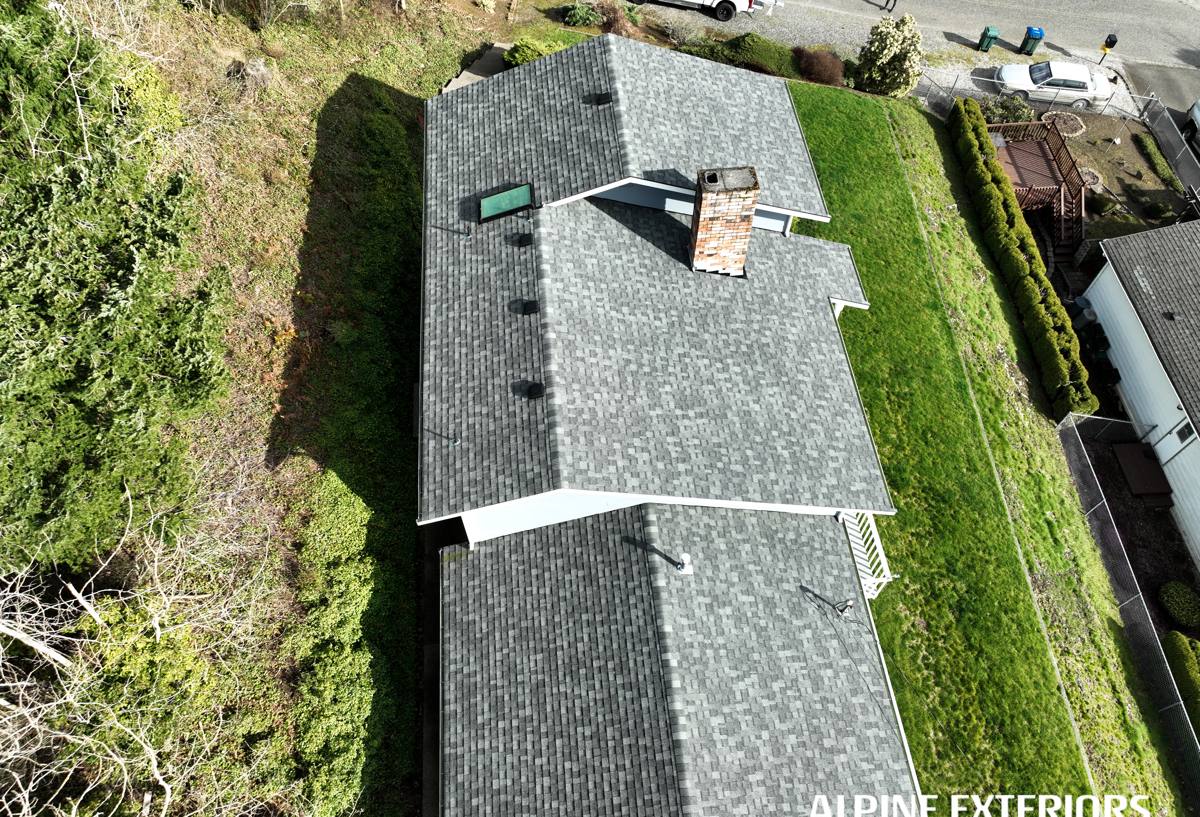
Signs a South Hill Home Needs a New Roof
Roofs rarely fail all at once. In this climate, the warning signs tend to show up gradually, and homeowners often live with them longer than they should because nothing is obviously "broken." Here's what we look for, and what you can check yourself from the ground or attic:
- Moss or algae streaking that keeps coming back within a few months of cleaning
- Granules collecting in gutters or at downspout outlets, a sign the shingle surface is wearing thin
- Curling, cracked, or lifted shingle edges, especially on north-facing slopes that stay damp longest
- Dark staining or sagging on interior ceilings, particularly after a heavy wind-driven rain event
- Soft or spongy spots when walking the roof, which usually means the decking underneath has absorbed moisture
- Rusting or separating flashing around chimneys, skylights, and roof-to-wall transitions
- Visible daylight or damp insulation in the attic near the roofline
- A roof that's 20+ years old and has never been fully replaced, only patched
Any one of these can be a minor fix. Several together usually mean the roof system as a whole is past the point where patching makes sense.
What a Correct Installation Actually Involves
Full Tear-Off, Not Overlay
We don't install new roofing over old layers. A tear-off lets us inspect the decking underneath for rot, soft spots, or trapped moisture — something you can't see or fix with a roof-over. Given how much moisture South Hill roofs cycle through each year, hidden deck damage is common enough that skipping this step is a real risk, not a shortcut worth taking.
Deck Inspection and Repair
Any plywood or plank decking that's soft, delaminated, or stained from long-term leaks gets replaced before anything new goes down. Installing new roofing over compromised decking just hides the problem and shortens the life of the whole job.
Moisture Barrier and Underlayment
This is where a lot of the real weather protection actually happens — the shingles or panels on top are the visible layer, but the underlayment is what keeps wind-driven rain from working its way in through nail holes, laps, and edges. In a climate with as much sideways rain as Bellingham gets, we treat underlayment as a primary defense, not an afterthought, and we pay close attention to eaves, valleys, and any low-slope sections where water sits longest.
Flashing at Every Transition
Chimneys, skylights, sidewalls, valleys, and vent penetrations are where the large majority of roof leaks actually start — not in the open field of shingles. Correct flashing means step flashing at walls, proper valley metal, and counter-flashing that's integrated with the roofing material, not just caulked over the top of it. Caulk is a maintenance item, not a waterproofing method.
Attic Ventilation
A roof that can't breathe traps moisture underneath the decking, which accelerates rot and gives moss and algae a damp surface to take hold on from below as well as above. Balanced intake (soffit) and exhaust (ridge or roof vents) ventilation is part of a correct installation, not an optional upgrade — especially in homes with older attic setups that were never brought up to current standards.
Choosing the Right Roofing Material for South Hill's Climate
There's no single "best" roofing material for every home — it depends on your roof's slope, tree cover, budget, and how long you plan to stay in the house. Here's how the common options compare for this specific climate:
| Material | Moss/Algae Resistance | Typical Lifespan Here | Notes for South Hill |
|---|---|---|---|
| Architectural asphalt shingle | Moderate (better with algae-resistant granules) | 20-30 years | Most common choice; good balance of cost and performance under tree cover |
| 3-tab asphalt shingle | Lower | 15-20 years | Lowest upfront cost, but shows moss and wear faster on shaded, north-facing slopes |
| Metal (standing seam) | High | 40-50+ years | Sheds moisture fast, holds up well to wind-driven rain; higher upfront cost |
| Synthetic/composite shake | Moderate to High | 30-40 years | Good option where a wood-shake look is wanted without the moisture upkeep of real wood |
For homes tucked under mature trees, which describes a good share of South Hill's older lots, we lean toward materials and granule treatments built specifically to resist moss and algae growth, since shade and dampness are a constant here. For homes with more open sun exposure, standard architectural shingle or metal both perform well.
Our Installation Process
Every roof is different, but the sequence of a proper installation stays consistent:
- On-site inspection and measurement, including a look at the attic and existing ventilation
- Written estimate covering material options, scope of work, and a realistic timeline
- Permit pulled where required, and materials ordered and staged
- Tear-off of old roofing down to the deck, with debris contained and hauled off same-day where possible
- Deck inspection and repair of any soft or damaged sections
- Installation of underlayment, ice-and-water protection at eaves and valleys, and all flashing
- Installation of the roofing material per manufacturer specification, not a shortcut version of it
- Ventilation components installed or upgraded as needed
- Final walk-through and cleanup, including a magnetic sweep for stray nails
We schedule around Bellingham's weather patterns as much as possible, but this region rarely offers a long guaranteed dry stretch, so our crews are set up to protect an open roof deck with temporary weatherproofing if conditions turn mid-job. That's a normal part of roofing here, not a sign something went wrong.
Moss Season Isn't Something You Install Around Once — It's Ongoing
Whatcom County's moss season is long enough that it shouldn't be treated as a once-a-year cleaning problem. A correctly installed roof reduces how fast moss takes hold, through material choice, proper slope drainage, and ventilation that keeps the deck and shingles drier from underneath. But no roofing material is completely moss-proof on a shaded, damp lot. Homeowners who get the longest life out of a new roof are the ones who pair a good installation with periodic gentle cleaning and keeping overhanging branches trimmed back so the roof gets more light and airflow.
What We Recommend After Installation
- Keep gutters clear of needles and leaf litter, especially heading into fall storm season
- Trim back branches that shade large sections of the roof for most of the day
- Have moss growth removed gently (not pressure-washed) before it builds up thick mats
- Schedule a flashing and vent check every few years, particularly after major windstorms
Permits, Timelines, and What to Expect
Most full roof replacements in the City of Bellingham and unincorporated Whatcom County require a permit, and inspections happen at set points during the job. We handle that process as part of the estimate, so it's not something you have to manage yourself. Timeline-wise, a typical single-family home reroof runs a few days once materials are on site and weather cooperates; steeper or more complex rooflines, or jobs that turn up deck damage, take longer. We'll give you a realistic window up front rather than a best-case number that assumes nothing goes wrong.
Why Hiring a Crew That Already Works South Hill Matters
A roofing crew that works this specific area regularly already knows what South Hill's tree cover, hillside drainage, and older housing stock tend to throw at a roof. That's not a small thing — it means fewer surprises once tear-off starts, better judgment calls on ventilation and material choice for a shaded lot versus an open one, and a crew that isn't guessing at how this climate behaves. We're a Bellingham-based siding and exterior contractor, and roofing is part of the same whole-exterior approach we bring to every home in Whatcom County: build for the actual weather this area gets, not a generic install.
If your South Hill home is due for a new roof, or you're just not sure yet whether repair or replacement makes more sense, we're happy to take a look and give you an honest read — no pressure, no upsell. Reach out for a free estimate using the form below.