 Bellingham Siding
 Siding Installation Built for Ferndale's Climate
Ferndale sits close enough to Bellingham Bay and the Puget Sound shoreline that salt-laden air is a real factor in how exterior materials age here, not a marketing talking point. Add Whatcom County's long, wet fall-through-spring stretch and the wind-driven rain that comes off the water during winter storms, and you have a climate that is genuinely hard on siding. Homes in Ferndale don't just need siding that looks good going up — they need a system and an installation method that will still be doing its job in year fifteen, not just year one.
We install James Hardie fiber cement siding exclusively, and we've built our Ferndale installation process around the specific stresses this area puts on a home's exterior: moisture intrusion, moss and algae growth in shaded, damp yards, and the slow corrosive effect of salt air on fasteners and trim. This page walks through what that means in practice — for the product, for the install, and for how we run a job in Ferndale specifically.
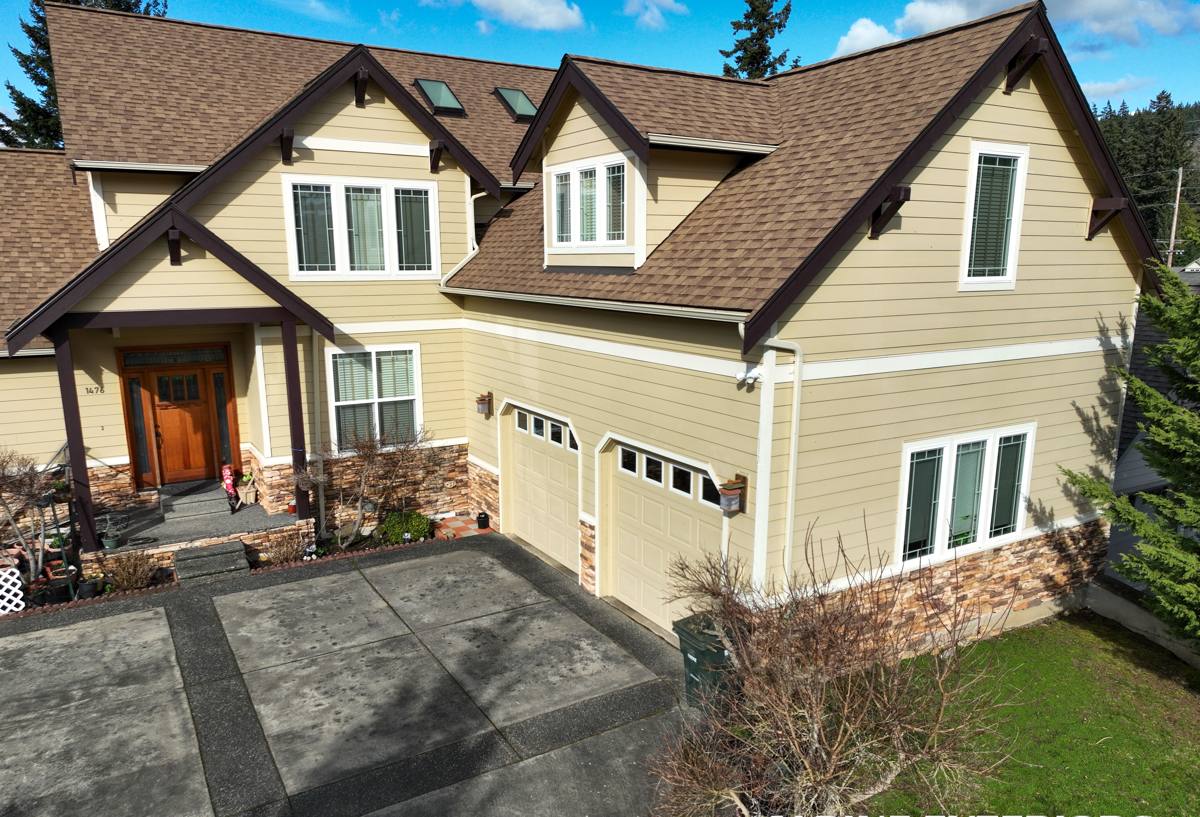
What Ferndale's Climate Actually Does to Siding
Every siding material fails in its own way, and the failure mode is almost always tied to moisture and time. In Ferndale, three climate factors do most of the damage:
Salt Air and Coastal Moisture
Proximity to Bellingham Bay means airborne salt and moisture settle on exterior surfaces year-round. Over time, salt exposure accelerates the corrosion of exposed metal fasteners, degrades poorly-protected finishes, and can work its way into seams and joints that weren't properly sealed or flashed at installation.
Driving Rain
Wind off the water during winter storms doesn't just fall on siding — it drives rain sideways and upward under laps, around trim, and into any gap in the water-resistive barrier. Siding that relies on paint or caulk alone to keep water out, rather than a properly shingled drainage plane, tends to show problems first at these pressure points.
A Long Moss Season
Shaded lots, tree cover, and persistent damp conditions give moss and algae a long growing season on north-facing walls and anywhere airflow is restricted. Moss holds moisture against the siding surface far longer than open-air drying allows, which is a problem for any material that isn't dimensionally stable when saturated.
None of these factors are unique to Ferndale, but the combination — salt air plus driving rain plus a long moss season — is a specific regional profile that should inform both the material you choose and how it's installed.
Why We Only Install James Hardie Fiber Cement
We don't install vinyl, LP SmartSide, Cemplank, Allura, primed spruce, or cedar. That's not a sales pitch — it's a standard we set because of what we've seen these products do over time in exactly the conditions Ferndale sees. Vinyl expands and contracts significantly with temperature swings and can crack or warp; wood-based products like LP SmartSide and cedar are organic materials that, however well-treated, remain vulnerable to moisture absorption and rot if a single seal fails. Cemplank and Allura are also fiber cement, but James Hardie's manufacturing process, factory finish system, and regional engineering are what we've found to hold up best.
Non-Combustible and Dimensionally Stable
Fiber cement doesn't expand and contract the way vinyl or wood does with temperature and moisture swings, and it's non-combustible — a meaningful difference from vinyl siding, which can soften or melt under heat exposure.
HZ5 Climate Engineering
James Hardie engineers its HZ product lines for specific climate zones. Western Washington falls into the HZ5 category, engineered for regions with sustained moisture exposure rather than dry-climate conditions. That's a meaningful distinction for a coastal Whatcom County property.
ColorPlus Factory Finish
Rather than a site-applied paint job, ColorPlus finish is baked on in a controlled factory environment, which gives more consistent coverage and better resistance to fading and moisture intrusion at the finish layer than field-painted alternatives. It also carries its own finish warranty separate from the substrate warranty.
A Warranty That Transfers
James Hardie's warranty structure is transferable to a subsequent homeowner, which matters for resale — a buyer's inspector or agent can point to documented, manufacturer-backed coverage rather than an unclear history of touch-ups and patches.
What a Correct Siding Installation Actually Involves
The product only performs as well as the installation behind it. Most siding failures we get called out to inspect in this region trace back to installation shortcuts, not the material itself. A correct job includes:
Water-Resistive Barrier and Flashing
Every wall needs a continuous water-resistive barrier underneath the siding, with flashing integrated at every window, door, and penetration so that any water that does get behind the surface has a path to drain back out rather than pooling against the sheathing. This is the single most important layer for a house dealing with driving rain, and it's also the layer that's invisible once the job is done — which is exactly why it's the layer that gets rushed on lower-quality installs.
Fastening and Clearances
James Hardie specifies fastener type, spacing, and placement precisely, and those specs assume corrosion-resistant fasteners appropriate for coastal exposure. Correct clearance is also required at grade, roof lines, and decks — siding installed too close to the ground or to a roof surface holds moisture against the bottom edge and is one of the most common causes of premature failure we see.
Joint and Seam Treatment
Butt joints, corners, and trim intersections need to be treated according to manufacturer specification — caulked, flashed, or both, depending on location — so that seams don't become the entry point for the driving rain this area gets every winter.
Our Installation Process in Ferndale
- Assessment and measurement — we look at the whole building envelope, not just the visible siding, including current moisture damage, trim condition, and drainage around the foundation.
- Tear-off and sheathing inspection — removing old siding lets us check the sheathing underneath for rot or moisture damage before anything new goes on. Any damaged sheathing gets addressed before installation continues.
- Water-resistive barrier installation — a new, continuous barrier is installed and integrated with flashing at every opening.
- Flashing at all penetrations — windows, doors, vents, and any other wall penetration get properly flashed before siding goes over them.
- Hardie panel or lap installation — installed to manufacturer fastening and clearance specifications, with attention to grade clearance given how much rain this area sees at ground level.
- Trim, caulking, and finish detail — corners, seams, and trim boundaries are sealed according to spec.
- Final walkthrough — we walk the completed job with the homeowner before calling it done.
Cost Factors for a Ferndale Siding Job
Every home is different, but the factors that move a siding project's cost up or down are consistent. We give firm numbers only after seeing the specific house, but this gives a general sense of what drives the estimate:
| Factor | Why It Matters |
|---|---|
| Current sheathing condition | Rot or moisture damage found during tear-off adds repair scope before new siding can go on |
| Home size and wall complexity | More corners, dormers, and trim detail mean more labor and material |
| Siding profile (lap vs. panel vs. shingle) | Different Hardie profiles carry different material and labor costs |
| Trim and accessory scope | Fascia, soffit, and trim replacement alongside siding changes total project cost |
| Access and site conditions | Tree cover, slope, and staging space affect labor time |
Signs Your Ferndale Home May Need New Siding
Some warning signs are obvious; others are easy to miss until they've become a bigger repair. Walk your exterior and check for:
- Persistent moss or algae growth that returns shortly after cleaning
- Soft spots, bubbling, or visible warping in the siding surface
- Paint that's peeling or blistering, especially near seams or trim
- Visible gaps or separation at corners, window trim, or butt joints
- Rust streaking from fasteners or trim hardware
- Interior signs like peeling paint or soft drywall on exterior-facing walls
- Siding that sits at or below grade with no visible clearance
If you're seeing more than one of these, it's worth having someone look at the wall assembly, not just the surface.
Why Hiring a Crew That Already Works in Ferndale Matters
Siding installation isn't uniform across regions. A crew that mostly works drier inland climates may not default to the flashing detail, clearance discipline, and fastener choices that a coastal Whatcom County property needs. A crew that already works Ferndale regularly has seen firsthand where houses in this specific area tend to take on water, where moss builds up fastest, and which details actually matter once winter storms roll in off the bay. That local pattern recognition is worth more than a generic install checklist — it's the difference between a job that looks right on day one and one that's still performing correctly after five winters of driving rain.
Maintenance After Installation
James Hardie siding is low-maintenance, not no-maintenance. A simple annual routine goes a long way in this climate:
- Rinse the exterior gently once a year to clear salt residue and organic buildup, especially on shaded or north-facing walls
- Check caulking at trim and joints for cracking or separation, particularly after a hard winter
- Keep gutters clear so overflow isn't running down the siding face
- Trim back vegetation that's shading walls and slowing dry-out time
- Address any moss regrowth promptly rather than letting it establish
If you're weighing a siding replacement in Ferndale, or just want an honest read on whether your current siding still has good years left in it, we're glad to come take a look. There's no pressure and no obligation — just a straight answer and, if you want one, a free estimate.