 Bellingham Siding
 Ferndale's Coastal Climate Is Hard on Roofs
Ferndale sits close enough to the water that salt-laden air is a real factor in how roofing materials age here, not just a talking point. Add in Whatcom County's long wet season, driving rain that comes in sideways off frequent windstorms, and short winter days that keep roof surfaces damp for weeks at a time, and you get a climate that's genuinely tougher on roofs than most of the country deals with. Fasteners corrode faster, moss and algae get a longer growing season, and any weak point in flashing or underlayment gets tested constantly instead of once or twice a year.
None of that means a roof here has to fail early. It means the materials, the details, and the workmanship have to be matched to the conditions, and that's the part that separates a roof that lasts into its third decade from one that starts giving you trouble in year twelve.
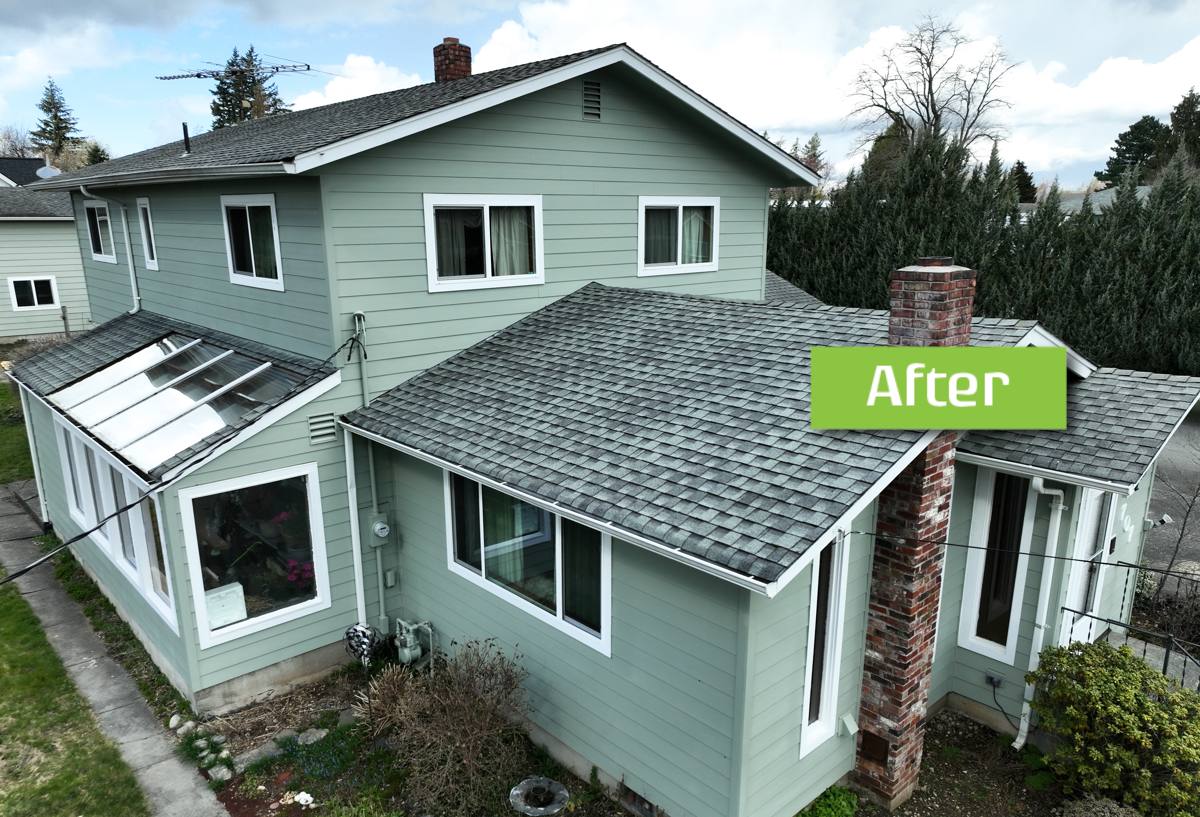
Signs It's Time for Replacement, Not Another Repair
Every roof needs occasional repairs — a lifted shingle after a windstorm, a flashing leak around a chimney. But there's a point where patching stops making financial sense and full replacement becomes the honest recommendation. Some signs we look for on Ferndale homes:
- Shingles that are cupping, curling, or losing granules in large patches rather than a few isolated spots
- Moss that has worked its way under shingle edges rather than just sitting on the surface
- Soft or spongy decking felt underfoot in the attic or from the ground with binoculars
- Repeated leaks in different locations each winter, rather than one recurring spot
- A roof that's 20+ years old and has never had ventilation or underlayment upgrades
- Daylight visible through the roof deck from inside the attic
If a roof is showing two or more of these, repair costs usually add up faster than a planned replacement would, and you're gambling on interior water damage in the meantime.
Roofing Materials That Hold Up Here
There's no single "best" roofing material — the right choice depends on your home's age, roof pitch, budget, and how much long-term maintenance you're willing to do. Here's how the common options compare for a Whatcom County home:
| Material | Typical Lifespan Here | Moss/Algae Resistance | Maintenance |
|---|---|---|---|
| Standard asphalt composition shingle | 18-25 years | Moderate — benefits from algae-resistant granules | Periodic moss removal, gutter clearing |
| Architectural/laminate shingle | 25-30 years | Good with algae-resistant (SBS/copper-granule) options | Same as standard, less frequent |
| Metal roofing (standing seam) | 40-50+ years | Very good — sheds moisture, little surface for moss to grip | Low, but fastener and coating checks matter near salt air |
| Cedar shake | 20-30 years with upkeep | Poor without regular treatment | High — regular cleaning and treatment required |
Why We Steer Most Homeowners Toward Algae-Resistant Shingles or Metal
Cedar shake looks great and plenty of older Ferndale homes still wear it well, but it demands a maintenance schedule most homeowners don't keep up with once the novelty wears off — and in a climate this wet, an under-maintained cedar roof invites rot faster than most people expect. That's a trade-off we're upfront about rather than talking anyone out of a look they want. For most replacements, we recommend architectural shingles with algae-resistant granules as the practical middle ground, or standing seam metal for homeowners who want to stop thinking about their roof for several decades.
What a Correct Roof Replacement Involves
Tear-Off and Deck Inspection
A real replacement means removing the old roofing down to the deck — not layering over it. That's the only way to actually see the plywood or plank decking underneath, catch soft spots or rot, and replace only what needs it rather than guessing. Skipping this step is how hidden rot turns into a sagging roofline a few years later.
Underlayment and Ice/Water Protection
In a climate with this much sustained rain, underlayment isn't a formality. We use synthetic underlayment across the field for its tear resistance and consistent moisture barrier, with self-adhering ice-and-water membrane at eaves, valleys, and around penetrations — the spots where wind-driven rain is most likely to find a way in.
Flashing Details
Flashing around chimneys, skylights, sidewalls, and valleys is where most roof leaks actually start, not in the open field of shingles. We replace flashing rather than reusing old pieces, and we pay particular attention to step flashing at wall intersections, since that detail gets rushed on a lot of production jobs.
Ventilation
A roof that can't breathe traps moisture in the attic, which shortens the life of the decking and the shingles from underneath — often the real cause of a roof that "failed early" for no obvious reason. We check intake and exhaust balance on every replacement and correct it when it's inadequate, which is common on older homes that were built before ventilation standards caught up with current shingle products.
Our Process From Estimate to Cleanup
- On-site inspection: We walk the roof (or use a drone where pitch or access makes that safer) and check the attic from inside, not just look from the ground.
- Written estimate: A clear scope of work and material breakdown, so you know exactly what's being replaced and why, before any money changes hands.
- Scheduling around weather: We plan installation windows with Whatcom County's rain patterns in mind and keep the roof dried in at every stage of tear-off.
- Tear-off and deck repair: Old roofing removed, decking inspected, damaged sections replaced.
- Underlayment, flashing, and shingle installation: Installed to manufacturer specifications, not just "close enough."
- Ventilation check and correction: Intake and exhaust balanced if the existing setup falls short.
- Cleanup and magnetic nail sweep: Job site and yard cleared of debris and stray fasteners.
- Final walkthrough: We go over the finished roof with you before calling the job done.
Moss and Algae: Living With a Wet Climate
Moss isn't just cosmetic — once it establishes itself under shingle tabs, it lifts them and lets water in underneath, which is a very different problem than moss sitting harmlessly on a ridge cap. A few habits go a long way toward keeping a new roof performing for its full lifespan:
- Keep overhanging tree limbs trimmed back to reduce shade and debris buildup
- Clear gutters at least twice a year so water isn't backing up under the roof edge
- Have moss physically removed (not just chemically killed) before it works under shingle edges
- Consider zinc or copper strips near the ridge on a new roof, which release trace metals that inhibit moss growth over time
- Avoid pressure-washing shingles directly — it strips granules and shortens shingle life
Cost Factors for a Ferndale Roof Replacement
Every roof is different, so we don't publish blanket prices, but the main variables that move a quote up or down are consistent:
| Factor | Why It Matters |
|---|---|
| Roof size and pitch | Steeper roofs take longer and require more safety setup, adding labor cost |
| Number of layers to remove | Tearing off two layers of old shingles costs more than one |
| Decking condition | Rotted plywood found during tear-off adds material and labor not visible in advance |
| Material choice | Standard shingles, architectural shingles, and metal carry different material and labor costs |
| Roof complexity | Valleys, dormers, skylights, and chimneys all add flashing work and time |
| Ventilation upgrades | Adding intake or exhaust venting where none existed is extra labor, but pays off in roof life |
Broadly speaking, a straightforward asphalt shingle replacement on an average-size home costs meaningfully less than a metal roof or a complex, multi-valley roofline — but the honest answer for your home only comes from an actual inspection, not a square-footage guess.
Why Hiring a Crew That Already Works Ferndale Matters
Roofing crews that work across a wide radius tend to treat every job the same regardless of climate. A crew that regularly works Ferndale and the surrounding Whatcom County area already knows to spec ice-and-water membrane generously, to check ventilation instead of assuming it's fine, and to expect moss and algae pressure rather than being surprised by it two years in. That local pattern recognition shows up in the details — the flashing choices, the underlayment coverage, the follow-up advice — more than in anything you'd see written on an estimate.
If your roof is showing its age or you're just trying to plan ahead, we're happy to take a look and give you a straight answer about repair versus replacement — no pressure, no inflated urgency. Request a free estimate using the form below and we'll get you scheduled for an inspection.