 Bellingham Siding
 Sehome's Windows Work Harder Than Most
Sehome sits close enough to Bellingham Bay to catch salt-laden air off the water, and close enough to the hill and its tree canopy to stay shaded and damp for long stretches of the year. That combination is tougher on windows than people expect. It's not one dramatic storm that wears out a window in this neighborhood — it's the slow, steady cycle of wind-driven rain, salt air settling on glazing and hardware, and a moss season that can stretch from October into April. Homes here range from older craftsman and post-war builds close to downtown to newer infill construction, and each era brings its own window problems, but the climate stress is the same for all of them.
When we talk about "custom windows" for a Sehome home, we mean windows sized and detailed to fit your actual openings and your actual exposure — not a one-size product pulled off a truck. Older homes in particular tend to have openings that don't match modern standard sizes, and a window that's forced to fit rather than built to fit is where leaks start.
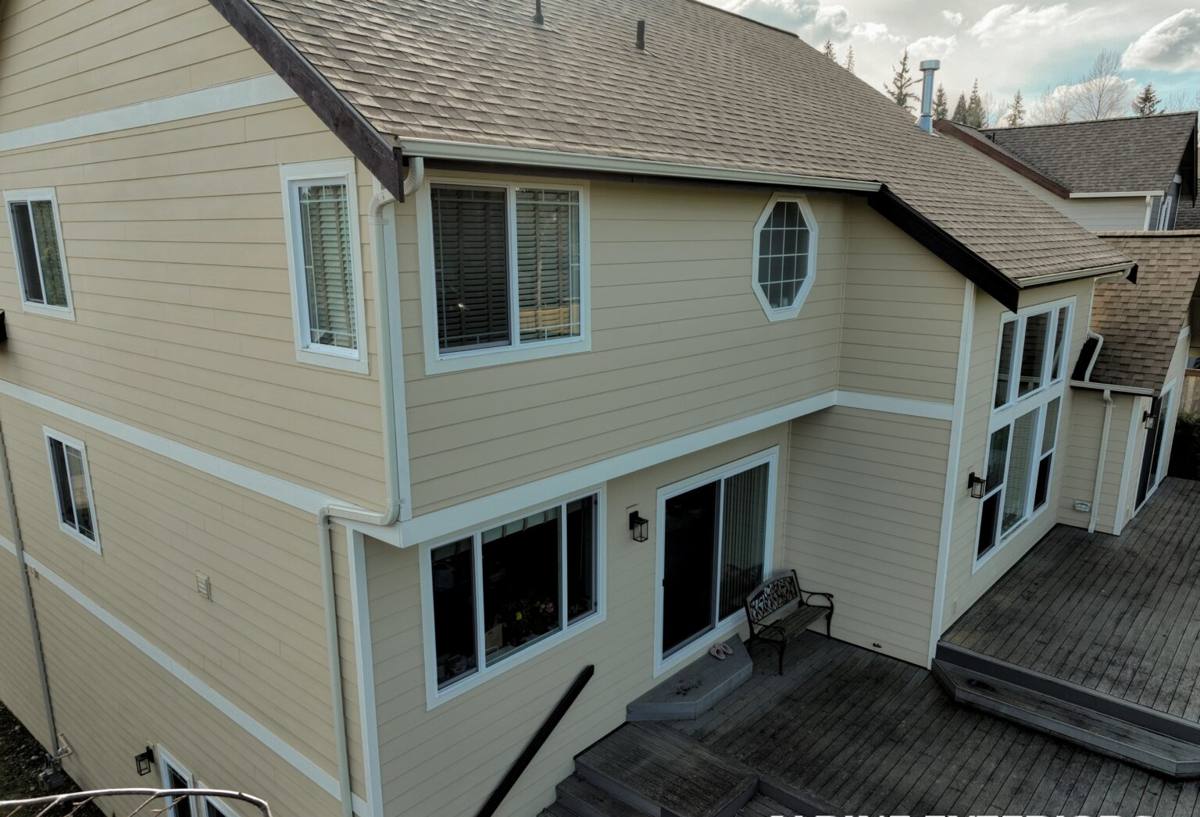
What Custom Actually Means Here
"Custom" gets used loosely in this trade, so it's worth being specific. For us it covers three things:
- Exact-dimension manufacturing — the window is built to your opening's real measurements, not rounded to the nearest stock size, which matters a lot on older Sehome homes with settled or slightly out-of-square framing.
- Frame material and finish matched to exposure — a west- or south-facing wall catching direct rain off the Bay needs different sealant and flashing detail than a shaded, tree-covered north wall that stays damp longer but sees less wind-driven water.
- Retrofit vs. full-frame replacement — whether we install into the existing frame or strip it back to the rough opening and rebuild, decided by the actual condition of the wood and sheathing behind it, not a default sales pitch.
None of that is exotic. It's just paying attention to the specific house instead of treating every job the same.
Retrofit vs. Full-Frame: How We Decide
Retrofit (also called "insert" or "pocket") replacement reuses your existing exterior frame and trim, which is faster and less disruptive. Full-frame replacement removes everything down to the studs, including exterior trim, and rebuilds the flashing from scratch. In a climate this wet, the deciding factor is almost always what we find once we open things up: if the sill and jambs are solid, retrofit is a legitimate, lower-cost option. If there's soft wood, staining, or old caulk doing the job flashing should be doing, full-frame is the only honest recommendation — patching over rot with a new window on top just hides the problem for a few more years.
Material Options for a Salt-Air, High-Rainfall Climate
There's no single "best" window material — there's a best match for your exposure, your home's style, and your budget. Here's how the common options actually perform in Whatcom County conditions:
| Material | Performance in Salt Air / Rain | Maintenance | Best Fit |
|---|---|---|---|
| Vinyl | Good — won't corrode or rot, handles moisture well | Low; occasional cleaning | Budget-conscious replacements, most home styles |
| Fiberglass | Excellent — very stable in temperature and moisture swings, resists salt exposure | Low | Higher-exposure walls, long-term durability priority |
| Wood (clad exterior) | Good on the exterior face, but interior wood needs protection from condensation | Higher; periodic finish upkeep | Craftsman and period-style homes where interior wood trim matters |
| Aluminum | Poor without a thermal break — conducts cold, promotes condensation, can corrode near salt air over time | Moderate | Rarely our first recommendation in this climate |
We don't install bare aluminum-frame windows on homes exposed to salt air and heavy condensation-driving humidity — not because the material is inherently bad everywhere, but because in this specific climate it tends to sweat, corrode at hardware points, and transfer cold in a way that shows up as mildew on interior sills within a few winters. That's a maintenance burden we don't think is fair to hand a homeowner without saying so upfront.
Where Moss Season and Driving Rain Actually Cause Damage
Whatcom County's long wet season doesn't attack the glass — it attacks the details around the glass. The failure points we see most often on Sehome homes are:
Sill Flashing and Pitch
A sill that doesn't pitch outward, or flashing that stops short instead of extending under the siding, lets water sit against the frame instead of shedding. Under Bellingham's rainfall totals, that constant low-level moisture is what rots a sill over a few winters — not any single storm.
Sealant Breakdown
Caulk and sealant have a service life, and salt air combined with UV and temperature cycling shortens it. We use sealants rated for marine and coastal exposure at penetration points, and we don't rely on caulk alone to do a flashing detail's job.
Moss and Organic Growth on Trim
Shaded, north-facing walls under tree canopy — common in Sehome's established, tree-lined blocks — stay damp longer and are where moss and algae take hold on wood trim and window sills fastest. That growth holds moisture against the surface, which accelerates rot if the underlying wood isn't sealed or if it's the wrong material for the exposure.
Condensation from Tight, Shaded Homes
Older, less-ventilated homes with new tight-sealing windows can see an increase in interior condensation if there isn't adequate ventilation. This is a real trade-off of energy-efficient windows worth discussing before install, not after you notice fogging.
Our Installation Process
- On-site assessment — we measure every opening individually and check the condition of the framing, sill, and existing flashing before quoting anything.
- Material and detail recommendation — based on that wall's actual sun, wind, and rain exposure, not a blanket product line.
- Manufacturing to exact dimensions — no forcing a stock size into a non-standard opening.
- Removal and inspection — once the old window is out, we confirm the sheathing and framing are sound before proceeding; any hidden rot gets flagged and discussed before we close it back up.
- Flashing and sealant installation — proper shingle-lap flashing sequence and coastal-rated sealant at every penetration.
- Window set and shim — leveled, squared, and insulated per manufacturer spec, not just caulked into place.
- Interior and exterior finish — trim, caulk lines, and cleanup to match the home.
- Final walkthrough — operation check on every window before we call the job done.
What to Look For When Hiring a Window Contractor Here
- They ask about your wall's specific sun and wind exposure, not just the window size.
- They're willing to explain retrofit vs. full-frame in plain terms and tell you which one your house actually needs.
- They mention flashing detail without you having to ask.
- They're licensed and insured to work in Washington State, and can show it without hesitation.
- They give you a real range and explain what moves the price, rather than a single vague number.
- They're upfront about maintenance trade-offs of different materials instead of only pushing one product line.
What Affects Cost
| Factor | Why It Matters |
|---|---|
| Retrofit vs. full-frame | Full-frame involves more labor, exterior trim work, and new flashing — a larger job than an insert replacement |
| Frame material | Vinyl is typically the most budget-friendly; fiberglass and clad-wood cost more but bring different durability and appearance trade-offs |
| Number and size of openings | Larger or non-standard openings require more custom manufacturing time |
| Condition behind the old window | Rot or sheathing damage found during removal adds repair scope beyond the window itself |
| Glazing package | Upgraded glass for noise, energy performance, or condensation resistance changes unit cost |
We'll give you a real number after we've actually looked at your openings — broad online estimates rarely account for what's really going on behind an older Sehome home's siding.
Why a Crew That Already Works Sehome Matters
Bellingham's building codes, permitting process, and typical home construction have specifics that a contractor unfamiliar with Whatcom County won't know by default — from what triggers a permit for window replacement to how older local homes were typically flashed and trimmed. A crew that regularly works in Sehome has already seen how this neighborhood's mix of older wood-frame construction and mature tree cover behaves through a wet season, which means fewer surprises once a window comes out and the wall behind it is exposed. That familiarity shows up as fewer change orders, more accurate first-pass estimates, and a finished job that's actually built for the block it's on rather than a generic climate assumption.
If you're weighing custom windows for a Sehome home, we're glad to take a look and walk you through what your specific openings and exposure actually call for. Reach out for a free, no-pressure estimate using the form below.