 Bellingham Siding
 Why Blaine Siding Takes More Damage Than Homes Farther Inland
Blaine sits right at the edge of Whatcom County, exposed to weather that homes even a few miles inland don't deal with in the same way. The salt air coming off the water accelerates corrosion on fasteners, trim, and any siding material that isn't built to handle it. Add in the driving rain that blows sideways during winter storms and a moss season that can stretch from fall through spring, and you've got a combination that finds every weak point in a home's exterior — old caulking, a missed flashing detail, a hairline crack that started small and didn't stay that way.
None of this means Blaine homes need siding repair more often out of bad luck. It means the margin for error in how siding was installed, sealed, and maintained is smaller here than in a drier, more sheltered part of the state. We've built our repair process around that reality.
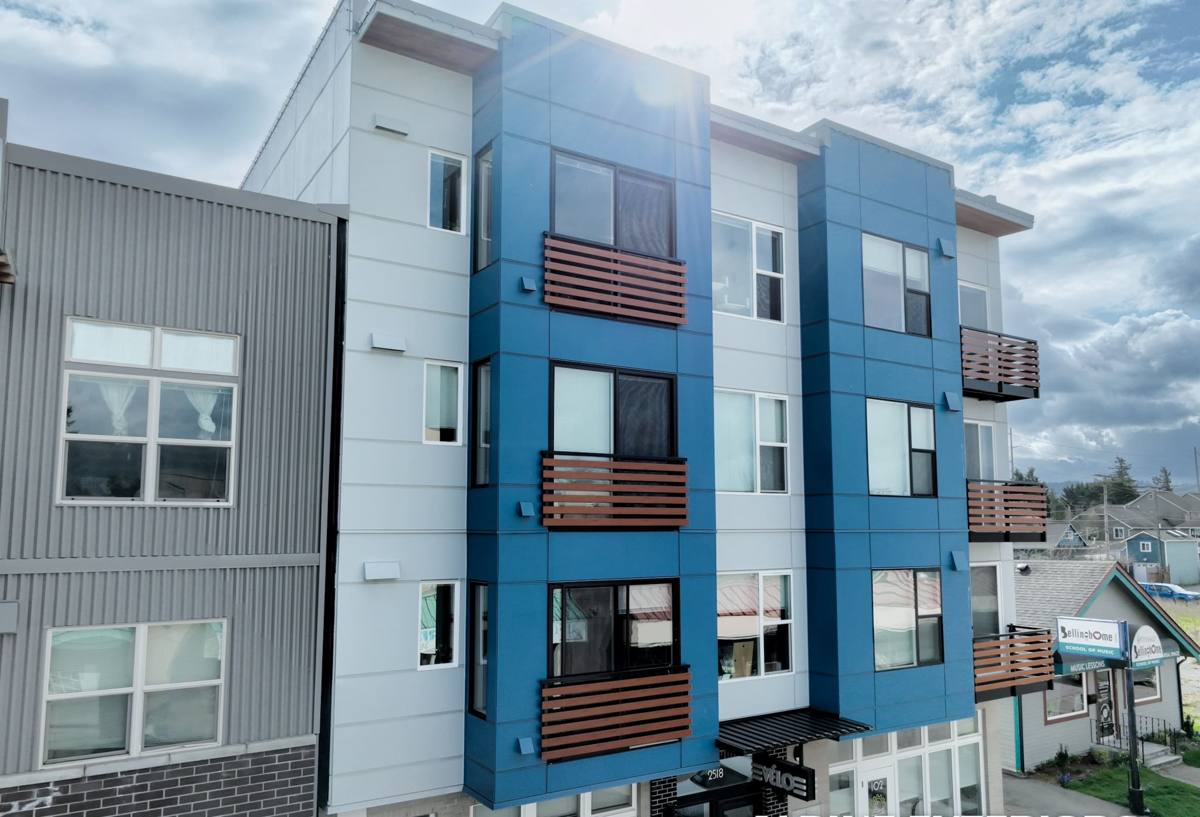
Signs Your Siding Needs Attention
Most siding problems don't announce themselves. They show up as small, easy-to-miss details long before there's visible rot or a section that's obviously failing. Homeowners in Blaine should walk the exterior a couple of times a year, especially after the wettest stretch of winter, and look for the following:
- Soft or spongy spots when you press on the siding, especially near the bottom courses and around window and door trim
- Persistent black or green staining that comes back within weeks of being cleaned — a sign moss or algae has a moisture source to feed on
- Cracked, split, or bubbling paint or finish, particularly on south- and west-facing walls that take the most weather
- Gaps or separation at seams, corners, and butt joints where caulking has shrunk or pulled away
- Visible corrosion streaks below nail heads or fasteners
- Warping, cupping, or bowing boards, which usually points to moisture trapped behind the siding rather than a surface-only issue
- Soft trim boards or window casings, which often fail before the siding field does
Any one of these on its own might be minor. Several showing up in the same area of the house usually means water has been getting behind the siding for a while, and a cosmetic fix won't solve it.
What a Correct Siding Repair Actually Involves
Diagnosing the Real Problem First
The most common mistake in siding repair isn't the patch itself — it's fixing the symptom instead of the cause. A cracked board gets replaced, but if the flashing behind it was never sealed properly, or if a gutter has been dumping water onto that section of wall for years, the new board fails the same way within a season or two. Before we touch any siding, we look at what's happening behind it: the house wrap condition, the flashing at windows and penetrations, and whether water has a path in that has nothing to do with the siding material itself.
Matching the Existing Siding
Repairs need to blend, not stand out as a patchwork of mismatched boards and paint sheens. That means matching board profile, reveal, and finish as closely as possible, and being upfront with homeowners when an exact match isn't realistic — older siding fades and weathers in ways that new material won't match perfectly on day one. When the existing siding is something other than what we install, we'll say so plainly rather than pretending it's a seamless fix.
Sealing and Flashing Details
This is where most repair failures come from in a climate like Blaine's. Every cut edge, seam, and penetration needs to be sealed correctly, and flashing needs to shed water down and out, not trap it. A repair that looks good but skips proper flashing at a window head or a butt joint is a repair that fails again — often faster than the original problem took to show up, because the surrounding material is now disturbed.
Common Repair Scenarios We See Along the Coast
| What Homeowners Notice | Likely Cause | What the Fix Involves |
|---|---|---|
| Persistent moss or algae staining | Shaded, damp wall areas with limited airflow and organic buildup holding moisture against the siding | Clean the surface, address the moisture source, and reseal or replace affected boards |
| Soft, crumbling siding near the ground | Splash-back from grade, poor drainage, or siding installed too close to the soil | Replace damaged sections and correct the clearance and drainage that caused it |
| Rust streaks below fasteners | Standard fasteners corroding faster in salt-influenced coastal air | Remove and replace with corrosion-resistant fasteners, patch the affected area |
| Cracked caulking at trim and seams | UV exposure and repeated wet-dry cycling breaking down old sealant | Strip and reseal with a sealant rated for the exposure, inspect behind it first |
| Warped or bowed boards | Trapped moisture behind the siding, often from a house wrap or flashing gap | Remove the affected boards, correct the underlying moisture path, reinstall |
Repair or Full Replacement? What Actually Drives That Decision
Not every damaged section needs a full re-side, and we're not going to tell a homeowner they need one if a targeted repair will hold up. But there's a point where patching keeps costing money without solving the underlying problem. The factors that push a project from repair toward replacement include:
| Factor | Leans Toward Repair | Leans Toward Replacement |
|---|---|---|
| Extent of damage | Isolated to one or two wall sections | Spread across multiple elevations |
| Age of existing siding | Still within its expected service life | Already near or past the end of its typical lifespan |
| Underlying moisture history | One identifiable, fixable cause | Repeated moisture issues across different areas |
| Material match | Close match available | Discontinued profile or finish, patchwork look unavoidable |
| Original installation quality | Sound overall, one weak point | Systemic flashing or sequencing errors throughout |
When repair is the right call, we say so — it's a smaller job, less disruption, and a lower cost. When the honest answer is that the home has outgrown what patching can fix, we'll walk through why before recommending anything larger.
Our Repair Process
1. On-Site Assessment
We inspect the damaged area and the surrounding siding, checking for moisture intrusion, flashing condition, and how far the problem actually extends — not just the spot that's visibly failing.
2. Honest Scope and Estimate
We explain what we found, what caused it, and what fixing it properly requires. If a repair is enough, we quote a repair. If the damage points to a bigger issue, we tell you why before recommending more work.
3. Correct Repair Execution
We remove only what needs to come out, correct the underlying cause, and replace or reseal using material and fasteners suited to Blaine's coastal exposure — not whatever's fastest.
4. Finish and Cleanup
Repaired sections are finished to match as closely as the existing siding allows, and the site is cleaned up before we consider the job done.
Why It Matters That We Already Work in Blaine
Siding repair on a home exposed to salt air and constant wind-driven rain isn't quite the same job as repair fifty miles inland. A crew that works Whatcom County's coastal edge regularly already knows where moisture tends to collect on homes exposed to marine weather, which flashing shortcuts show up as failures years later, and how long moss season actually runs in this part of the county versus what a general contractor might assume. That familiarity shows up in fewer repeat callbacks and repairs that hold up through the next wet winter, not just until the next dry spell.
What We Use When Siding Needs to Be Replaced, Not Just Patched
When a repair calls for new boards rather than resealing what's there, we install James Hardie fiber cement siding — it's the only siding material we put on homes, full stop. We don't install vinyl, LP SmartSide, or wood siding, including on repair work. Part of the reason is practical: fiber cement holds up to salt air and constant moisture cycling far better than wood or engineered wood products, and it doesn't have the expansion, contraction, and moisture-absorption issues that make vinyl and OSB-based sidings harder to repair cleanly over time. James Hardie's ColorPlus factory finish also holds color better than field-applied paint, which matters when you're trying to match new material into an older wall. If your home currently has a different siding material, we'll be straightforward about what a repair with Hardie will and won't match, and what your options are.
Getting Your Siding Looked At
If you're seeing staining that won't clean off, soft spots near the base of your walls, or cracked caulking that keeps coming back, it's worth having someone look at it before the next wet season makes the problem bigger. We offer free, no-pressure estimates for siding repair in Blaine and the surrounding Bellingham area — use the form below to get a time on the calendar.