 Bellingham Siding
 Roof Repair Built for Birchwood's Climate
Birchwood sits close enough to Bellingham Bay that salt-laden air reaches every roof in the neighborhood, and it's far enough north that the region's long, wet winters put roofs through months of near-constant moisture. Add in driving rain that comes sideways off Pacific storms and a moss season that can run from October through May, and you have a climate that is genuinely hard on roofing — harder than most homeowners realize until a leak shows up on the ceiling. Roof repair here isn't a one-size-fits-all job. It has to account for what Whatcom County weather actually does to shingles, flashing, and fasteners over time, not just patch whatever is visibly broken.
This page is about roof repair specifically for Birchwood homes — what tends to fail first in this neighborhood, what a correct repair involves, and how we approach the job so it holds up through the next several wet seasons instead of needing attention again in a year.
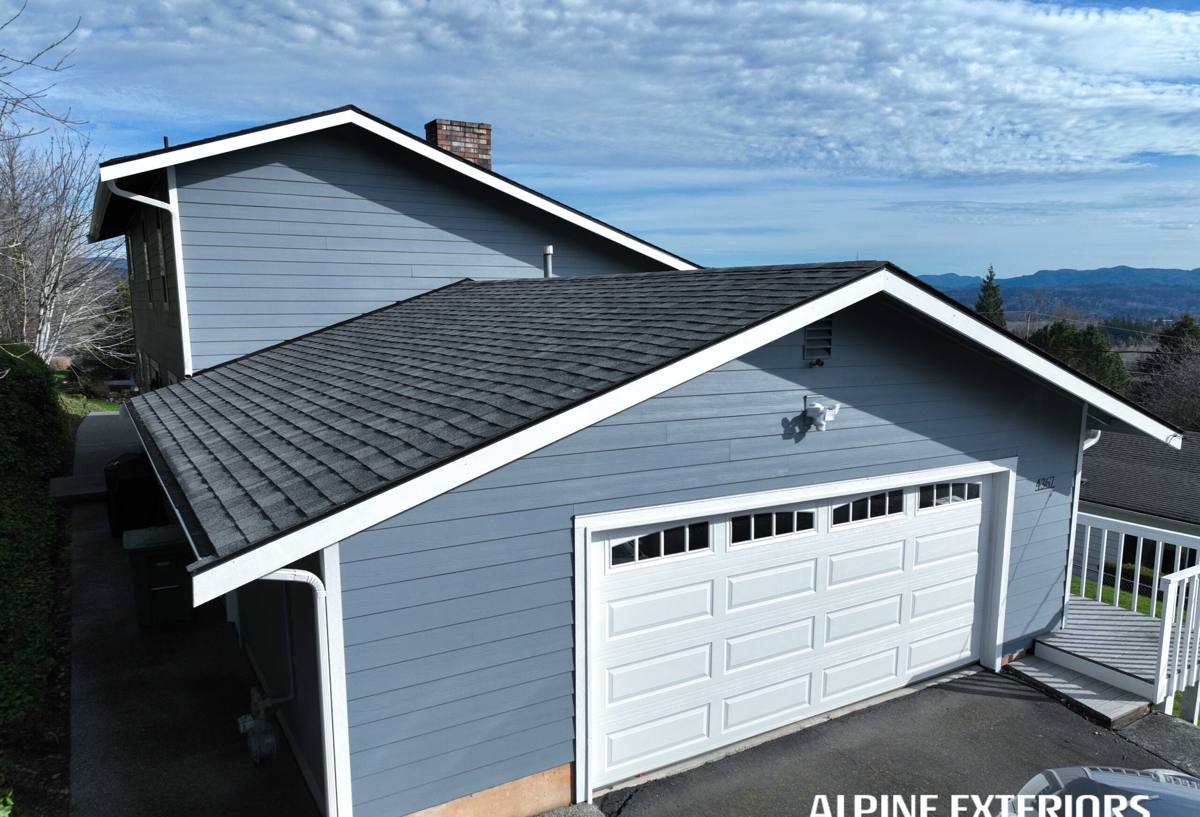
Signs Your Birchwood Roof Needs Repair
Most roof problems don't start as a hole. They start small and get worse every time it rains, which in Bellingham is often. Homeowners usually catch one of these signs before calling:
- Water stains or discoloration on ceilings, especially near exterior walls or chimneys
- Dark streaks, green or black patches, or visible moss growth on shingles
- Granules collecting in gutters or at the base of downspouts
- Shingles that look curled, lifted, or cracked, especially on south- and west-facing slopes
- Soft or spongy spots when walking the roof, or sagging visible from the ground
- Daylight visible through the roof deck from inside the attic
- Rust streaking or corrosion around metal flashing, vents, or fasteners
- Higher-than-usual heating bills, which can point to attic moisture and lost insulation value
None of these mean the whole roof is done for. Most are addressable with targeted repair if they're caught before the underlying decking and framing get wet repeatedly.
Why Small Leaks Get Big Fast Here
In a drier climate, a minor flashing gap might sit for a season without doing real damage. In Bellingham, that same gap sees rain event after rain event, sometimes for weeks without a real drying window. Wood framing and decking stay damp longer, which invites rot and, eventually, mold. That's the main reason we tell Birchwood homeowners not to wait on a small leak — the climate here turns "small" into "structural" faster than in most parts of the country.
What Actually Damages Roofs in Bellingham's Coastal Climate
Moss and Organic Growth
Moss doesn't just sit on top of shingles looking bad — it holds moisture against the roofing material around the clock, works its rhizoids under shingle edges, and lifts tabs enough for wind-driven rain to get underneath. Left long enough, moss growth alone can shorten a roof's usable life by years, especially on the shaded, north-facing slopes common on Birchwood's tree-lined lots.
Driving Rain and Wind
Storms off the Strait and the Sound don't just drop rain straight down — they push it sideways, which finds every weak seam in flashing, hip and ridge caps, and vent boots. A roof that would shed vertical rain just fine can still leak under wind-driven rain if the laps and seals weren't installed with that in mind.
Salt Air Corrosion
Proximity to the Bay means airborne salt settles on exposed metal — flashing, fasteners, gutter hardware, and vent stacks — and accelerates corrosion compared to inland neighborhoods. Corroded fasteners lose their grip, and corroded flashing develops pinholes that let water through long before the shingles themselves fail.
Temperature Swings and Freeze Cycles
Whatcom County doesn't get brutal winters, but it does get enough freeze-thaw cycling to stress water that's already trapped under lifted shingles or in saturated decking. That repeated expansion and contraction widens small cracks and gaps over a season or two.
Common Roof Repairs We Handle in Birchwood
| Repair Type | Typical Cause | What's Involved |
|---|---|---|
| Flashing repair/replacement | Corrosion, poor original install, wind lift | Remove and replace step, valley, or counter-flashing; reseal properly |
| Shingle replacement (spot) | Wind damage, moss lift, granule loss, age | Match existing shingle, replace affected section, check decking underneath |
| Leak tracing and deck repair | Long-term moisture intrusion | Locate true entry point (often not where the stain is), replace wet decking |
| Vent boot and pipe collar repair | Rubber boot degradation, cracking | Replace boot, reseal, check surrounding shingles |
| Moss and debris removal | Shade, moisture, organic buildup | Soft-wash removal, gutter and valley clearing, treatment application |
| Ridge and hip cap repair | Wind exposure, age, poor fastening | Re-secure or replace cap shingles, check underlayment at the ridge |
| Gutter and drip edge repair | Corrosion, clogging, improper pitch | Repair or replace sections, correct pitch, clear debris path |
How We Diagnose a Roof Before Repairing It
A repair is only as good as the diagnosis behind it. We don't quote work off a photo or a description over the phone — Birchwood's mix of roof ages, slopes, and tree cover means two roofs with the same symptom can have completely different causes.
Our Process
- Ground and interior walkthrough. We check attic spaces, ceilings, and exterior walls for staining, moisture, or daylight gaps before ever getting on the roof.
- Full roof inspection. We walk the roof itself, checking every slope, valley, penetration, and flashing point — not just the area near the reported leak.
- Leak tracing. Water often travels along decking or framing before it shows up inside, so we trace the actual entry point rather than repairing where the stain happens to appear.
- Moisture and decking check. We assess whether decking underneath is still sound or has softened from prolonged exposure.
- Written scope and options. You get a clear explanation of what's actually wrong, what repair options exist, and honest input on whether a targeted repair is enough or a larger section needs attention.
- The repair itself. Matched materials where possible, correct flashing and underlayment detailing, and a cleanup that leaves the site as tidy as we found it.
Repair vs. Replacement: How We Help You Decide
| Factor | Leans Toward Repair | Leans Toward Replacement |
|---|---|---|
| Roof age | Under 15-20 years, depending on material | Near or past expected service life |
| Extent of damage | Localized to one area or slope | Multiple areas, widespread granule loss |
| Decking condition | Sound, dry, structurally solid | Soft, rotted, or repeatedly wet |
| Moss/algae history | Recent, surface-level growth | Long-term growth that's degraded shingles |
| Underlying cause | Isolated flashing or vent failure | Systemic underlayment or ventilation problem |
Most calls we get in Birchwood turn out to be legitimate repairs, not full replacements. We'd rather fix what's actually wrong and tell you honestly if a roof has more life left in it than a sales pitch might suggest.
Materials and Methods We Use
Repair work in this climate has to match the standards of new installation, not cut corners because it's "just a patch." That means using shingles and flashing that are compatible with what's already on the roof, sealing laps and fasteners correctly for wind-driven rain, and using corrosion-resistant fasteners and flashing given how much salt air this area sees. Where underlayment is exposed during a repair, we check its condition and address ice-and-water protection at vulnerable points like valleys and eaves rather than just covering the area back up. A repair that ignores these details might look fine for a season and then fail again at the first real Bellingham storm.
Moss Prevention and Roof Care After the Repair
A repair solves today's problem. Keeping moss and moisture from causing the next one takes some ongoing attention, which we're upfront about when the work is done:
- Keep gutters and valleys clear of needles and debris, especially in fall
- Trim back overhanging branches to reduce shade and let roof surfaces dry between rains
- Schedule moss removal before it establishes rather than after it's visibly thick
- Have flashing and vent boots checked every couple of years, since they wear faster than the shingle field around them
- Address any new staining or granule loss promptly rather than waiting for a full season
None of this requires major cost or effort — it just requires not ignoring a roof for years at a time in a climate that doesn't forgive neglect.
Why a Crew That Already Works Birchwood Makes a Difference
Roofing crews unfamiliar with this specific stretch of Whatcom County sometimes underestimate how much salt exposure, moss pressure, and wind-driven rain a Birchwood roof deals with compared to a roof twenty miles inland. We work this neighborhood regularly, which means we already know which slopes tend to hold moss longest, which flashing details fail first on the area's typical roof styles, and what a correct repair needs to look like to actually hold through a Bellingham winter. That local pattern recognition shortens the diagnosis, and it means the repair is built for the conditions your roof will actually face — not a generic fix pulled from a different climate.
Get a Straight Answer on Your Roof
If you're seeing a stain, a soft spot, or moss you're not sure is a cosmetic issue or a real problem, it's worth a look before the next round of storms rolls through. We offer free, no-pressure estimates for Birchwood homeowners — you'll get an honest read on what's actually going on with your roof and what it would take to fix it right. Fill out the form below to get started.