 Bellingham Siding
 Roofing for Happy Valley's Specific Climate
Happy Valley sits close enough to the water and the surrounding tree cover that its roofs take a different kind of beating than roofs a few miles inland. Salt-laden air off the Puget Sound corridor accelerates corrosion on exposed metal fasteners and flashing. Driving rain, pushed sideways by winter storms, finds its way into laps and seams that a calmer climate would never test. And the shade from mature trees on so many Happy Valley lots means roofs stay damp longer after every storm, which is exactly what moss and moisture-loving algae need to take hold. None of this is unique to any one house — it's the baseline condition every roof in this pocket of Bellingham has to handle, year after year, for decades.
An asphalt shingle roof that's installed correctly for this environment holds up well. One that's installed to a generic, one-size-fits-all standard tends to show problems early — granule loss at the eaves, soft spots near valleys, moss ridges along the north-facing slopes, and premature curling at the tabs. The difference almost always comes down to details most homeowners never see: underlayment choice, ventilation balance, fastener material, and how carefully the flashing was tied into the shingle courses.
Why Asphalt Shingles Still Make Sense Here
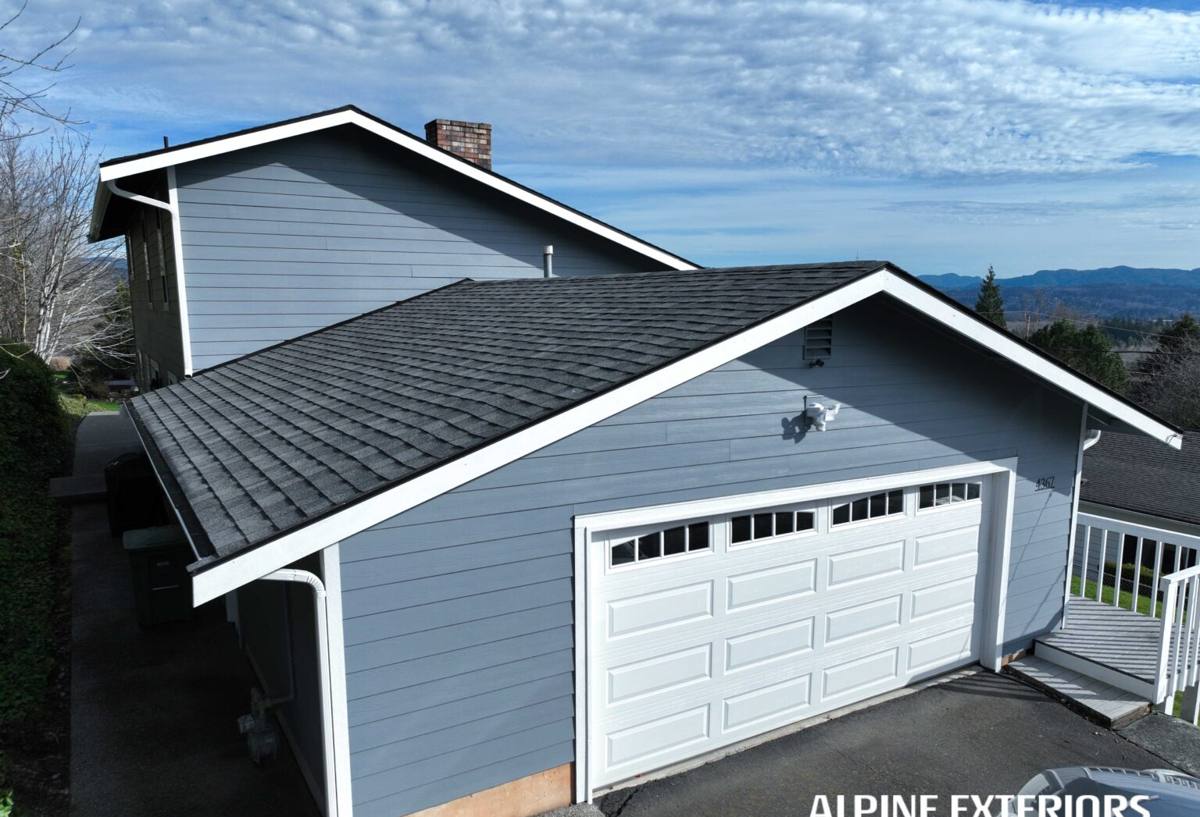
Asphalt shingles remain the most common roofing choice in Whatcom County for good reason. They're a proven, well-understood product with a long track record in wet Pacific Northwest climates, they come in a range of price points and appearances, and when installed with the right underlayment and ventilation package, they perform reliably against sustained rain and wind. They're also easier to repair in sections than some alternative materials, which matters on a roof that's going to face decades of moss growth, storm debris, and the occasional falling branch.
That said, not every shingle line is built the same, and not every installation method is appropriate for a house sitting under heavy tree cover a short distance from salt water. We select products and details based on what a specific roof's exposure actually calls for, not a single default spec used on every job regardless of site conditions.
What "Correct for This Area" Actually Means
- Corrosion-resistant fasteners and flashing metal appropriate for salt-air exposure
- A high-quality synthetic or self-adhering underlayment, not builder-grade felt alone
- Ice-and-water shield at eaves, valleys, and roof-to-wall transitions where wind-driven rain concentrates
- Balanced intake and exhaust ventilation sized to the actual attic, not a generic vent count
- Shingle lines rated for algae and moss resistance on shaded or north-facing slopes
Signs a Happy Valley Roof Needs Replacement, Not Just Repair
Homeowners often ask us to look at a roof expecting a small repair, and sometimes that's exactly what it needs. But in this climate, certain symptoms usually mean the roof has moved past the point where patching makes sense.
- Moss growth that returns within a season or two of cleaning, especially in continuous mats rather than isolated patches
- Granules collecting in gutters in noticeable amounts, indicating the shingles are wearing down to the mat underneath
- Soft or spongy decking felt underfoot in the attic, which points to sustained moisture intrusion rather than a single leak
- Curling, cupping, or cracked tabs across multiple slopes rather than one isolated area
- Daylight visible through the roof deck at valleys or penetrations
- A roof approaching or past the 20–25 year mark for standard three-tab, or 25–30 years for architectural shingles, combined with any of the above
Age alone isn't a reason to replace a roof that's otherwise sound. But age combined with visible wear in a climate this demanding usually means the underlayment and decking have absorbed more moisture cycling than the shingles show on the surface.
What a Correct Installation Involves
Tear-Off and Deck Inspection
We remove the existing roofing down to the deck rather than layering over old shingles. This lets us actually see the plywood or plank decking underneath, which is the only way to know whether there's rot, delamination, or soft spots that need to be addressed before new material goes down. Covering a compromised deck with new shingles just hides the problem for a few more years.
Underlayment and Water Barrier
Given how much driving rain this area sees, underlayment isn't a place to cut corners. We install a full water-resistant underlayment across the field of the roof, with self-adhering ice-and-water membrane at the eaves, valleys, and any wall or chimney transitions — the spots where wind-driven rain is most likely to work its way sideways under the shingle courses.
Flashing
Flashing around chimneys, skylights, vent pipes, and wall intersections is where most roof leaks actually originate, not in the open field of shingles. We use corrosion-resistant metal sized and formed for each specific detail, tied in with the underlayment in the correct shingle-over-flashing sequence so water is always directed out and down, never trapped behind a seam.
Ventilation
Attic ventilation gets overlooked constantly, but it directly affects how long a roof lasts in a shaded, damp climate like this one. Balanced intake at the soffits and exhaust at the ridge keeps the attic temperature and moisture level stable, which reduces condensation on the underside of the decking and slows moss and algae growth on the shingle surface itself.
Shingle Installation and Nailing
We follow manufacturer nailing patterns and exposure specs precisely — proper nail placement, count, and depth are what keep shingles rated for high wind actually performing at that rating. Rushed or incorrect nailing is one of the most common causes of early shingle blow-off in coastal Whatcom County wind events.
Comparing Shingle Options for Happy Valley Homes
| Shingle Type | Typical Lifespan Here | Moss/Algae Resistance | Best Fit |
|---|---|---|---|
| Standard 3-tab | 18–22 years | Standard granules only, needs algae-resistant option | Budget-conscious re-roofs, sunnier lots |
| Architectural (laminated) | 25–30 years | Available with algae-resistant granules | Most Happy Valley homes, especially shaded lots |
| Premium/designer architectural | 30+ years | Enhanced algae-resistant granule blends | Steep-slope, high-visibility roofs, heavier tree cover |
For most homes in this neighborhood, we point people toward an architectural shingle with algae-resistant granules as the practical baseline — the extra upfront cost over basic three-tab is usually offset by fewer years lost to early moss staining and granule loss under tree cover.
Moss and Algae: Managing It, Not Just Cleaning It
Moss on a roof isn't just cosmetic. Left to grow, it holds moisture against the shingle surface, works its way under tab edges, and can lift shingles enough to let water underneath. In Happy Valley's shaded, damp microclimate, moss pressure is higher than in more open parts of Bellingham, so we build moss management into the roof itself rather than treating it as an annual chore.
- Algae-resistant shingle granules on north-facing and heavily shaded slopes
- Proper attic ventilation to reduce the moisture that feeds growth from underneath
- Clean roof-to-tree clearance recommendations where branches keep a slope in near-constant shade
- Gutter and valley design that doesn't trap standing debris where moss gets its first foothold
Our Process on a Happy Valley Roofing Job
We start with an on-site inspection, not a phone estimate — moss patterns, slope exposure, and existing ventilation vary enough house to house in this area that we need to actually see the roof. From there we walk through material options and a written scope covering tear-off, underlayment, flashing, ventilation, and shingle selection, so there's no ambiguity about what's included. During the job, we protect landscaping and gutters, tear off and inspect the deck, address any rot before covering it, and install underlayment, flashing, ventilation, and shingles in the sequence described above. We do a final walk-through with the homeowner and haul away all debris and old material — nothing gets left in the yard or driveway.
What to Expect From a Crew That Works This Area
- They should inspect the attic and deck, not just the shingle surface, before quoting
- They should be able to explain their underlayment and ice-and-water shield plan specific to your roof's exposure
- They should ask about tree cover and shade patterns, not just square footage
- They should be licensed and insured to work in Washington, with proof available on request
- They should give you a written scope, not a verbal estimate, before work begins
- They should be upfront about tear-off findings if the deck needs repair, with pricing agreed before proceeding
Why Local Experience in Happy Valley Matters
A roofing crew that regularly works Happy Valley and the surrounding Bellingham area already knows what this specific microclimate does to a roof over time. They know which slopes tend to hold moss, how much ice-and-water shield a given roof pitch actually needs given the amount of driving rain this area sees, and what ventilation setup keeps attics dry under heavy tree canopy. That's different knowledge than a crew whose experience is mostly in a drier, more open climate. Local experience also means faster response for follow-up questions, a crew familiar with Whatcom County permitting and disposal requirements, and a track record you can actually check with neighbors rather than reviews from another part of the state.
If your Happy Valley roof is showing moss, granule loss, or age, we're happy to take a look and give you an honest read on whether it needs repair or replacement — no pressure, no obligation. Fill out the form below for a free estimate.